

Every aspiring writer faces the same daunting question: where do you begin when transforming raw ideas into compelling stories? The blank page can feel overwhelming, but the best books on creative writing offer a roadmap through the maze of storytelling techniques, character development, and narrative structure. These guides provide the foundation that transforms amateur enthusiasm into professional skill.
Whether you dream of writing the next bestselling novel or simply want to improve your storytelling abilities, learning from master writers and experienced teachers can accelerate your journey. The best books on creative writing don’t just teach rules—they reveal the secrets behind captivating prose, memorable characters, and plots that keep readers turning pages late into the night.
Key Takeaways
• Expert guidance matters: Learning from established authors and writing teachers provides proven techniques that can save years of trial and error
• Practice makes progress: The most effective writing guides combine theoretical knowledge with practical exercises and writing prompts that spark creativity
• Structure supports creativity: Understanding story frameworks and narrative techniques gives writers the foundation to experiment confidently
• Consistency builds skill: Regular practice with guidance from quality writing books develops both technical ability and creative confidence
• Different books serve different needs: Some focus on inspiration and process, while others teach specific techniques for plot, character, or style
Why Creative Writing Books Are Valuable
Creative writing books serve as mentors in book form, offering wisdom that might otherwise take decades to acquire through experience alone. These resources provide practical techniques for storytelling that have been tested by successful authors and refined through years of teaching.
Help writers understand plot, character, and structure represents perhaps the greatest value these books offer. While creativity flows naturally for many writers, understanding how to shape that creativity into compelling narratives requires knowledge of fundamental storytelling principles. The best guides break down complex concepts like three-act structure, character arcs, and narrative tension into manageable, actionable advice.
Moreover, quality writing books offer exercises that improve creativity and writing habits. These aren’t just theoretical discussions—they provide specific techniques for building writing skills effectively and developing the discipline necessary for long-term success.
The psychological benefits shouldn’t be overlooked either. Many aspiring writers struggle with self-doubt and creative blocks. Reading about other writers’ struggles and solutions helps normalize the challenges while providing concrete strategies for overcoming them.
What to Look for in a Creative Writing Book
Not all writing guides are created equal. The most valuable books share several key characteristics that distinguish them from generic advice.
Clear explanations of writing techniques form the foundation of any worthwhile guide. Look for books that break down complex concepts into understandable steps. The best authors can explain sophisticated storytelling principles in accessible language without oversimplifying.
Practical exercises and writing prompts separate truly helpful books from those that merely discuss writing in abstract terms. Effective guides provide specific activities that allow writers to practice new techniques immediately. These might include character development exercises, plot structure worksheets, or creative writing exercises that enhance skills.
Advice from experienced authors carries weight that theoretical discussions cannot match. Books written by successful writers who have navigated the publishing world offer insights into both craft and career development. Their personal experiences provide context for the techniques they teach.
Examples of strong storytelling help illustrate abstract concepts. The best writing guides include excerpts from published works that demonstrate techniques in action, making it easier to understand how principles apply in practice.
Best Books on Creative Writing for Aspiring Authors
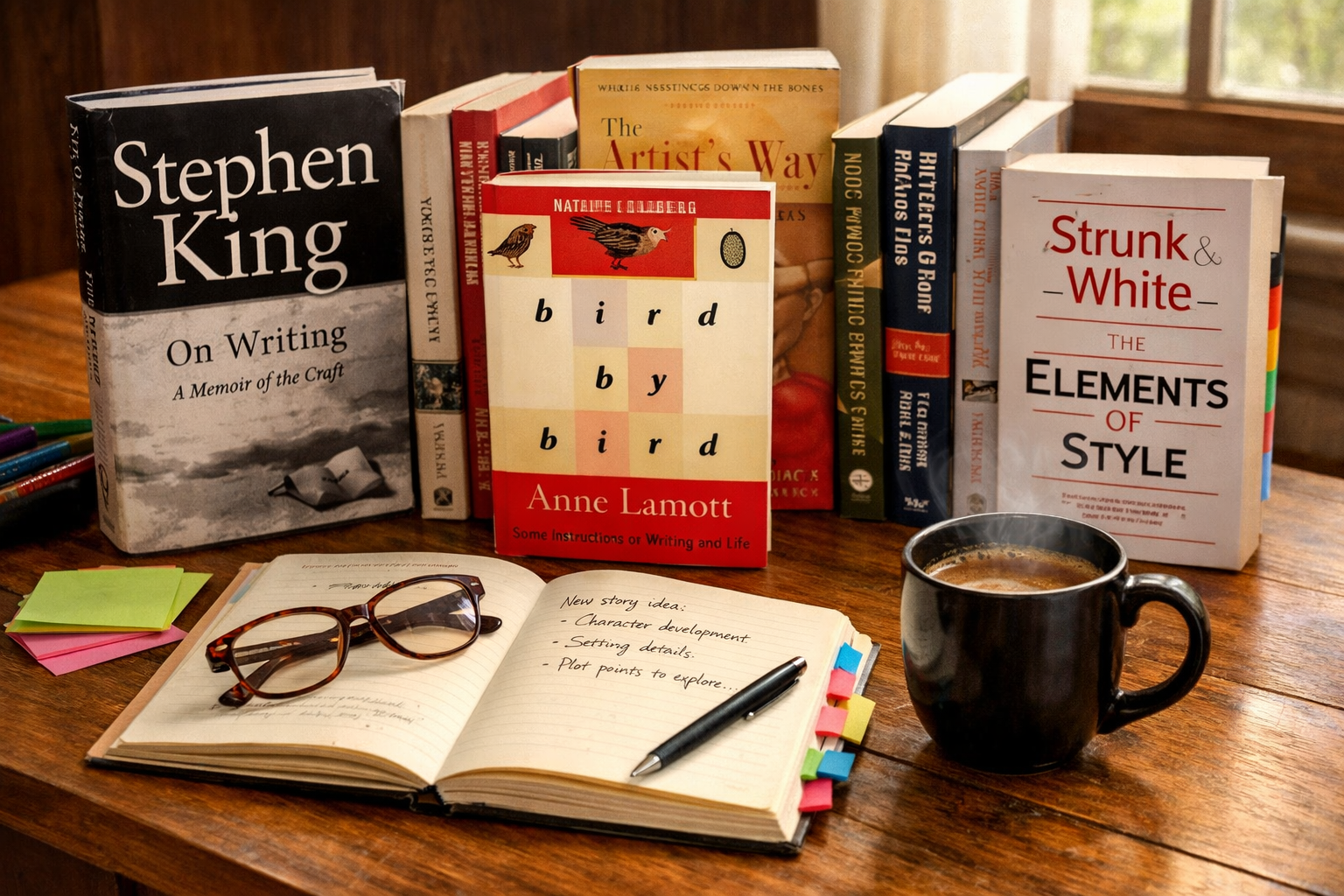
On Writing by Stephen King 📚
Stephen King’s memoir-meets-manual combines memoir with practical writing advice in a way that feels both personal and instructional. King shares his journey from struggling writer to bestselling author while weaving in fundamental lessons about craft and discipline.
The book focuses on discipline, storytelling, and editing with King’s characteristic directness. He emphasizes that writing is both art and craft—requiring inspiration and hard work in equal measure. His advice on daily writing habits and revision processes has influenced countless writers.
King’s approach to developing consistent writing habits resonates particularly well with beginners who struggle to establish routines. His practical advice about setting word count goals and creating dedicated writing spaces provides actionable steps for building a sustainable practice.
Bird by Bird by Anne Lamott
Anne Lamott’s beloved guide offers insights into the writing process with warmth, humor, and brutal honesty about the challenges writers face. The title itself comes from her father’s advice to her brother about tackling an overwhelming school project about birds: take it “bird by bird.”
The book encourages creativity and overcoming writer’s block through Lamott’s concept of “shitty first drafts” and her emphasis on perfectionism as creativity’s enemy. She provides practical strategies for overcoming writer’s block while maintaining a compassionate tone about the emotional aspects of writing.
Lamott’s discussion of finding your authentic voice and writing with emotional honesty makes this essential reading for writers seeking to develop their unique style.
The Elements of Style by William Strunk Jr. and E. B. White
This classic guide to clear and effective writing remains relevant nearly a century after its initial publication. While not exclusively about creative writing, its principles apply to all forms of written communication.
The book focuses on grammar, style, and clarity with concise rules that have become foundational to American writing instruction. Its famous directive to “omit needless words” has influenced generations of writers to value precision and economy in their prose.
For creative writers, this book provides the technical foundation that supports artistic expression. Understanding proper grammar and style conventions allows writers to break rules intentionally rather than accidentally.
Save the Cat! Writes a Novel by Jessica Brody
Adapted from the successful screenwriting guide, this book explains story structure using a popular storytelling framework that has proven effective across media. Brody translates Blake Snyder’s beat sheet approach for novelists.
The guide helps writers plan compelling plots by breaking stories into fifteen specific beats that create satisfying narrative arcs. This systematic approach particularly benefits writers who struggle with plot structure and storytelling enhancement.
The book includes analysis of popular novels showing how successful authors use these structural principles, making abstract concepts concrete and applicable.
Steering the Craft by Ursula K. Le Guin
Le Guin’s masterful guide provides exercises designed to strengthen writing skills with the precision and artistry expected from one of literature’s most respected voices. Her approach focuses on the fundamental elements of prose craftsmanship.
The book focuses on language, style, and narrative technique through ten chapters covering everything from sentence rhythm to point of view. Each chapter includes exercises that help writers practice specific skills in isolation before integrating them into larger works.
Le Guin’s emphasis on mastering point of view and narrative voice makes this particularly valuable for writers seeking to develop sophisticated storytelling techniques.
Best Creative Writing Books for Beginners
Beginning writers need guides that explain fundamentals without overwhelming them with advanced techniques. Books that explain storytelling basics clearly should be the foundation of any new writer’s library.
Look for guides that include exercises and writing prompts specifically designed for beginners. These should start with simple concepts and gradually build complexity. Creative writing for beginners requires a structured approach that builds confidence alongside skill.
Resources that help writers develop confidence address the psychological challenges that often derail new writers. Books that normalize struggle and provide encouragement help beginners persist through the inevitable difficulties of learning to write.
Consider starting with books that focus on developing a writing practice before diving into complex craft discussions. Understanding how to establish routines and maintain motivation often matters more than advanced technique for writers just beginning their journey.
Creative Writing Books Focused on Story Structure
Understanding narrative architecture separates amateur storytelling from professional craft. Guides that teach plot development and pacing provide the framework that supports compelling narratives.
Effective structure books cover techniques for building compelling narratives through careful attention to story beats, turning points, and resolution. They help writers understand how successful stories create and release tension to maintain reader engagement.
Understanding story arcs and character journeys requires books that show how plot and character development interweave. The best guides demonstrate how character creation transforms storytelling by ensuring that external events drive internal change.
Look for books that provide templates and worksheets for planning stories while emphasizing that structure should support creativity rather than constrain it.
Creative Writing Books Focused on Style and Language
While story structure provides the skeleton, style and language create the flesh of compelling prose. Books focused on improving sentence structure and word choice help writers develop the technical skills necessary for beautiful writing.
Developing a unique writing voice requires understanding how language choices create personality on the page. The best style guides show how mastering tone in writing allows writers to create distinct narrative voices.
Writing vivid descriptions and dialogue demands specific techniques that can be learned and practiced. Look for books that provide concrete strategies for creating sensory details and realistic conversation while avoiding common pitfalls like excessive dialogue tags or purple prose.
These books often include exercises for experimenting with different styles and voices, helping writers discover their natural strengths while expanding their range.
How to Learn From Creative Writing Books
Simply reading writing guides won’t improve your skills—application is essential. Practicing exercises regularly transforms theoretical knowledge into practical ability. Set aside time specifically for working through book exercises rather than just reading about techniques.
Applying techniques to your own writing projects helps integrate new skills into your natural process. Try implementing one new technique at a time in your current work rather than attempting to apply everything simultaneously.
Revisiting lessons while editing and revising often reveals deeper understanding. Concepts that seemed unclear during initial reading frequently become clear when applied to your own writing challenges.
Keep a writing journal to track which techniques work best for your style and which need more practice. This creates a personalized reference guide based on your actual experience.
Tips for Improving Your Creative Writing Skills
Beyond reading craft books, developing as a writer requires consistent practice and exposure to excellent writing. Write consistently and build a writing routine that allows for regular skill development. Even fifteen minutes daily produces better results than sporadic marathon sessions.
Read widely across different genres to absorb different storytelling approaches and stylistic techniques. Pay attention to how successful authors handle dialogue, description, pacing, and character development.
Seek feedback from other writers or readers to gain perspective on your work’s strengths and weaknesses. Join writing groups, take classes, or find beta readers who can provide honest, constructive criticism.
Consider understanding how to market your writing skills as part of your development process. Understanding your audience and the publishing landscape can inform your creative choices.
Conclusion
The best books on creative writing serve as invaluable mentors for aspiring authors, offering time-tested wisdom from successful writers and teachers. These guides provide more than just inspiration—they deliver practical techniques, structured exercises, and proven frameworks that transform raw creativity into polished storytelling.
From Stephen King’s honest insights about discipline and process to Ursula K. Le Guin’s masterful exercises in prose craftsmanship, each recommended book offers unique value for writers at different stages of their journey. Whether you’re struggling with plot structure, seeking to develop your voice, or simply trying to establish a consistent writing practice, these resources provide the guidance needed to grow as a storyteller.
Take action today: Choose one book from this list that addresses your current writing challenges. Commit to not just reading it, but actively working through its exercises and applying its techniques to your own projects. Remember that becoming a skilled writer requires patience, practice, and persistence—but with the right guidance, your storytelling dreams are entirely achievable.
Consider exploring how to become an author as your next step, and remember that every published author once sat where you sit now, wondering how to transform their ideas into compelling stories.


