

Every great novelist started with a blank page and a dream. Yet between that first spark of inspiration and a finished manuscript lies a journey filled with craft decisions, storytelling challenges, and technical hurdles that can overwhelm even the most passionate aspiring writer. The best books on writing fiction serve as trusted mentors, offering wisdom from masters who’ve navigated these waters successfully.
Key Takeaways
• Essential craft books like “On Writing” by Stephen King and “Bird by Bird” by Anne Lamott provide foundational guidance on the writing process and mindset
• Character development resources such as “The Anatomy of Story” help writers create compelling, three-dimensional characters that drive engaging narratives
• Plot and structure guides offer frameworks for organizing stories effectively, preventing common pitfalls that derail first novels
• Genre-specific books provide targeted advice for different fiction categories, from literary fiction to fantasy and mystery
• Combining multiple resources creates a comprehensive learning foundation rather than relying on a single approach
Why Fiction Writing Books Matter for Beginners 📚
Writing fiction requires mastering multiple complex skills simultaneously. Unlike other crafts where you can focus on one technique at a time, novelists must juggle character development, plot structure, dialogue, pacing, and prose style while maintaining narrative coherence across thousands of words.
The best books on writing fiction break down these overwhelming challenges into manageable components. They provide:
- Structured learning paths that build skills progressively
- Proven techniques tested by successful authors
- Common mistake identification to help avoid pitfalls
- Inspiration and motivation during difficult writing periods
- Professional insights into the publishing industry
For first-time authors, these resources prevent years of trial-and-error learning. Enhancing writing abilities boosts creativity, and structured guidance accelerates this enhancement significantly.
Essential Craft Books Every Fiction Writer Needs
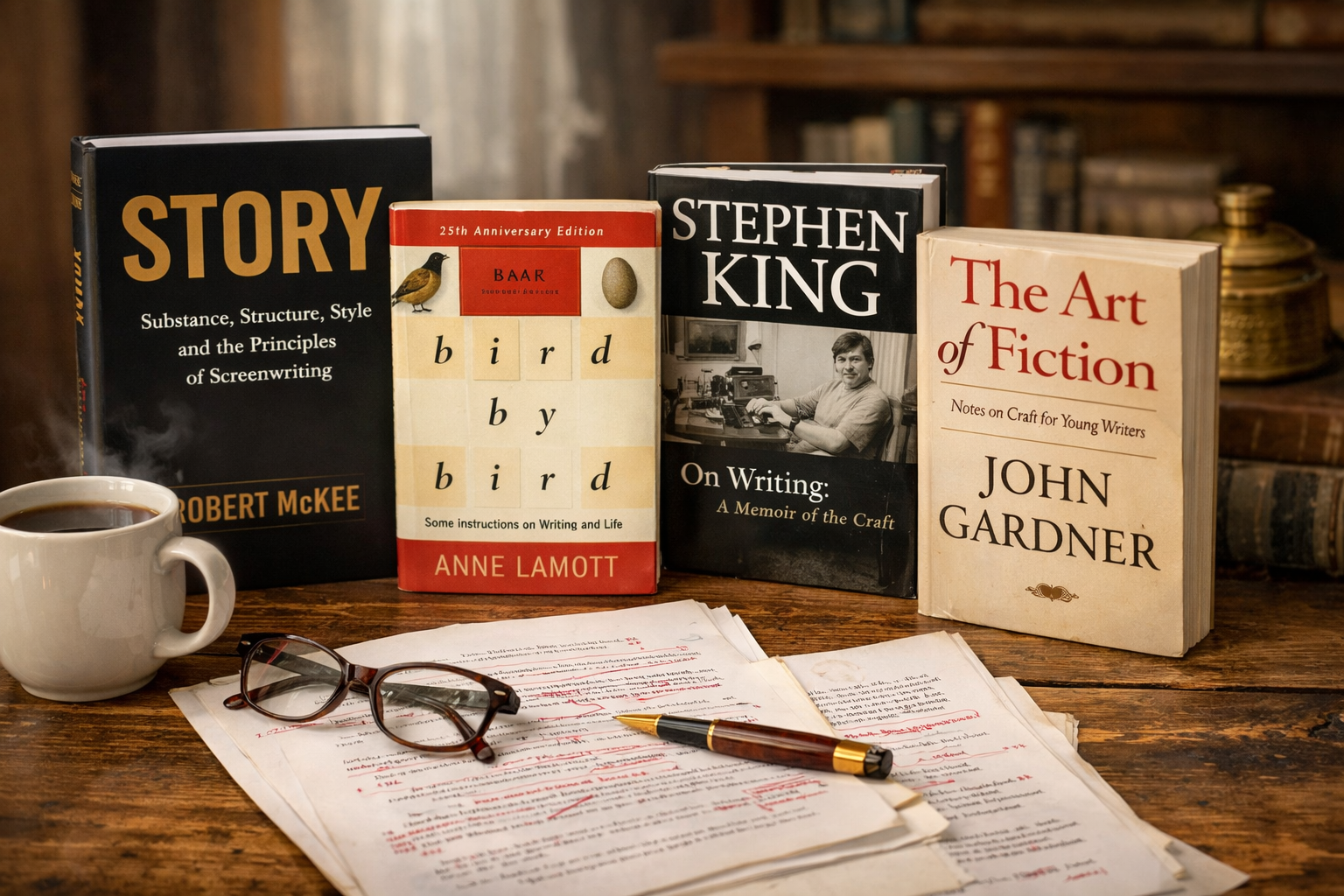
On Writing: A Memoir of the Craft by Stephen King
Stephen King’s masterpiece combines autobiography with practical writing advice. The book’s first half explores King’s journey from struggling writer to bestselling author, while the second half delivers concrete guidance on the writing process.
Key lessons include:
- Writing as both craft and art
- The importance of reading extensively
- Daily writing habits and discipline
- Revision techniques that transform rough drafts
King’s accessible style makes complex concepts understandable for beginners while providing depth for experienced writers.
Bird by Bird: Some Instructions on Writing and Life by Anne Lamott
Lamott’s beloved guide addresses both the technical and emotional aspects of writing. Her “bird by bird” philosophy—taking overwhelming projects one small step at a time—resonates with writers facing their first novel.
Notable insights:
- Overcoming perfectionism and self-doubt
- The value of “shitty first drafts”
- Finding your authentic voice
- Balancing writing with life responsibilities
The Art of Fiction by John Gardner
Gardner’s comprehensive guide covers fundamental storytelling principles with literary depth. Though more academic than other entries, it provides essential understanding of what makes fiction work at a fundamental level.
Core concepts:
- Vivid and continuous fictional dreams
- Character motivation and development
- Moral fiction and artistic responsibility
- Technical aspects of prose style
This book particularly benefits writers aiming for literary fiction or those seeking deeper understanding of the craft’s theoretical foundations.
Character Development and Storytelling Fundamentals
Creating compelling characters stands as fiction writing’s most crucial skill. Readers connect with stories through characters, making character development in fiction writing absolutely essential for success.
The Anatomy of Story by John Truby
Truby’s systematic approach to storytelling provides a comprehensive framework for building narratives around character development. Unlike formulaic plot structures, Truby focuses on organic story growth from character needs and conflicts.
Key components:
- Seven essential story steps
- Character web relationships
- Moral argument development
- Genre-specific adaptations
Creating Character Arcs by K.M. Weiland
Weiland’s guide specifically addresses character transformation throughout stories. This book excels at showing how character growth drives plot advancement rather than simply responding to external events.
Essential elements:
- Positive, negative, and flat character arcs
- Lie the character believes
- Truth the character must learn
- Moment of change identification
Understanding how to build believable characters becomes much easier with Weiland’s systematic approach. Her methods help writers avoid static characters who merely react to plot events.
Plot Structure and Narrative Techniques
While character development drives stories emotionally, solid plot structure provides the framework that keeps readers engaged. The best books on writing fiction offer various approaches to plotting, allowing writers to find methods that match their creative processes.
Save the Cat! Writes a Novel by Jessica Brody
Adapted from Blake Snyder’s screenwriting guide, Brody’s version translates cinematic structure principles to novel writing. The book provides a clear 15-beat structure that works across genres.
Structural elements:
- Opening image and theme stated
- Catalyst and debate sections
- Fun and games midpoint
- Dark night of the soul
- Finale and closing image
Into the Woods by John Yorke
Yorke examines story structure through the lens of five-act dramatic theory, arguing that all compelling narratives follow similar patterns rooted in human psychology.
Advanced concepts:
- Fractal story structure
- Act and scene construction
- Subplot integration
- Character revelation timing
For writers struggling with plotting in fiction writing, these structural approaches provide reliable frameworks while maintaining creative flexibility.
Genre-Specific Writing Guides
Different fiction genres have unique conventions, reader expectations, and technical requirements. Specialized guides help writers understand these nuances and craft stories that satisfy genre readers while maintaining originality.
Writing Fantasy & Science Fiction by the Writers’ Digest
This comprehensive guide covers worldbuilding, magic systems, technology integration, and other speculative fiction essentials.
Specialized topics:
- Worldbuilding consistency
- Magic system logic
- Technology and society interaction
- Alien culture development
Writing Mysteries and Thrillers by Sue Grafton
Grafton’s guide addresses the unique challenges of plotting suspenseful fiction, including clue placement, red herrings, and pacing.
The Art of Romance Writing by Various Authors
Romance fiction requires specific emotional beats and relationship development patterns that this collection addresses comprehensively.
For writers interested in young adult fiction, understanding genre-specific requirements becomes crucial for connecting with target audiences.
Practical Writing Process Books
Beyond craft instruction, successful fiction writing requires developing effective work habits, overcoming creative blocks, and maintaining long-term motivation.
The War of Art by Steven Pressfield
Pressfield’s motivational guide addresses the internal resistance that prevents writers from completing projects. His concept of “Resistance” helps writers identify and overcome procrastination, self-doubt, and creative blocks.
Big Magic by Elizabeth Gilbert
Gilbert explores creativity’s mysterious nature while providing practical advice for maintaining creative courage throughout the writing journey.
Inspirational concepts:
- Curiosity over passion
- Permission to create imperfectly
- Collaboration with ideas
- Fear and creativity coexistence
Developing consistent writing habits becomes easier when writers understand both practical techniques and psychological barriers.
Building Your Fiction Writing Library
Creating an effective learning library requires balancing different perspectives and approaches. The best books on writing fiction often complement each other, with some focusing on inspiration while others provide technical instruction.
Recommended Reading Sequence:
- Start with inspiration: “On Writing” or “Bird by Bird”
- Learn structure: “Save the Cat! Writes a Novel”
- Develop characters: “The Anatomy of Story”
- Address genre needs: Specialized guides for your chosen genre
- Maintain motivation: “The War of Art” or “Big Magic”
Budget-Conscious Approach:
- Library borrowing for initial exploration
- Used book purchases for frequently referenced guides
- Digital versions for searchable reference materials
- Writing group sharing to access multiple resources
Remember that writing practice exercises enhance skills more effectively than passive reading alone. Apply lessons from these books through regular writing practice.
Advanced Craft Development
Once writers master fundamental skills, advanced guides help refine technique and develop distinctive voices.
The Art of Fiction by David Lodge
Lodge analyzes literary techniques through close reading of exemplary passages, showing how established authors achieve specific effects.
Several Short Sentences About Writing by Verlyn Klinkenborg
This unconventional guide focuses on sentence-level craft, helping writers develop clarity and precision in their prose.
Advanced techniques:
- Sentence rhythm and flow
- Word choice precision
- Paragraph construction
- Voice development
Understanding how narrative builds strong fictional characters requires this deeper level of craft awareness that advanced guides provide.
Conclusion
The journey from aspiring writer to published author requires dedication, skill development, and the right guidance. The best books on writing fiction provide that guidance, offering wisdom from successful authors who understand the challenges first-time novelists face.
Start with foundational texts like Stephen King’s “On Writing” or Anne Lamott’s “Bird by Bird” to build confidence and understanding. Then expand your knowledge with structure guides, character development resources, and genre-specific instruction that matches your writing goals.
Remember that reading about writing is only the beginning. Apply these lessons through consistent practice, effective brainstorming techniques, and regular writing sessions. The combination of solid instruction and dedicated practice will transform your fiction writing dreams into published reality.
Take action today: Choose one book from this guide, commit to reading it within the next month, and begin implementing its lessons in your current writing project. Your future as a published author starts with that first step.


