

Over 90 million stories have been published on digital platforms in 2026, transforming how writers share their work with the world. This explosive growth in online storytelling has created unprecedented opportunities for writers to bypass traditional publishing gatekeepers and connect directly with readers.
The rise of digital writing a story website platforms has democratized storytelling, allowing anyone with an internet connection to publish their work instantly. Whether you’re crafting your first short story or developing a full-length novel, these platforms offer tools, communities, and audiences that were once available only to established authors.
This comprehensive guide explores the top story writing websites available in 2026, helping you choose the perfect platform to launch your writing journey. From beginner-friendly communities to professional publishing tools, you’ll discover which writing a story website aligns with your goals and writing style.
Key Takeaways
• Multiple platform types exist: Creative communities like Wattpad, professional tools like Reedsy, and monetization platforms like Substack serve different writer needs
• Community matters: Platforms with active reader engagement often provide better growth opportunities than isolated writing tools
• Monetization varies widely: Some platforms offer built-in revenue streams while others focus purely on audience building
• Success requires consistency: Regular posting and reader engagement drive better results than sporadic publishing
• Free options work well: Many successful writers start with free platforms before investing in premium tools
What Is a Writing a Story Website?
A writing a story website is a digital platform where writers can create, edit, publish, and share their stories with online audiences. These platforms combine word processing tools with publishing capabilities, allowing writers to reach readers without traditional publishing barriers.
Types of Story Writing Platforms
Creative Writing Communities focus on building connections between writers and readers. Platforms like Wattpad and Archive of Our Own emphasize social features, comments, and follower systems that help stories gain visibility through community engagement.
Self-Publishing Platforms provide professional tools for writers serious about publishing. These include editing features, formatting options, and distribution channels to major bookstores and libraries.
AI-Assisted Writing Tools incorporate artificial intelligence to help writers overcome blocks, generate ideas, and improve their prose. These platforms often include grammar checking, style suggestions, and plot development assistance.
Who Benefits from Story Writing Websites
Beginners find these platforms invaluable for learning writing fundamentals without pressure. The supportive communities provide feedback and encouragement that traditional writing can’t match.
Hobbyist Writers enjoy the creative outlet and social aspects without commercial pressure. Many writers use these platforms purely for enjoyment and creative expression.
Aspiring Authors leverage these platforms to build audiences, test story concepts, and develop their craft before pursuing traditional publishing deals.
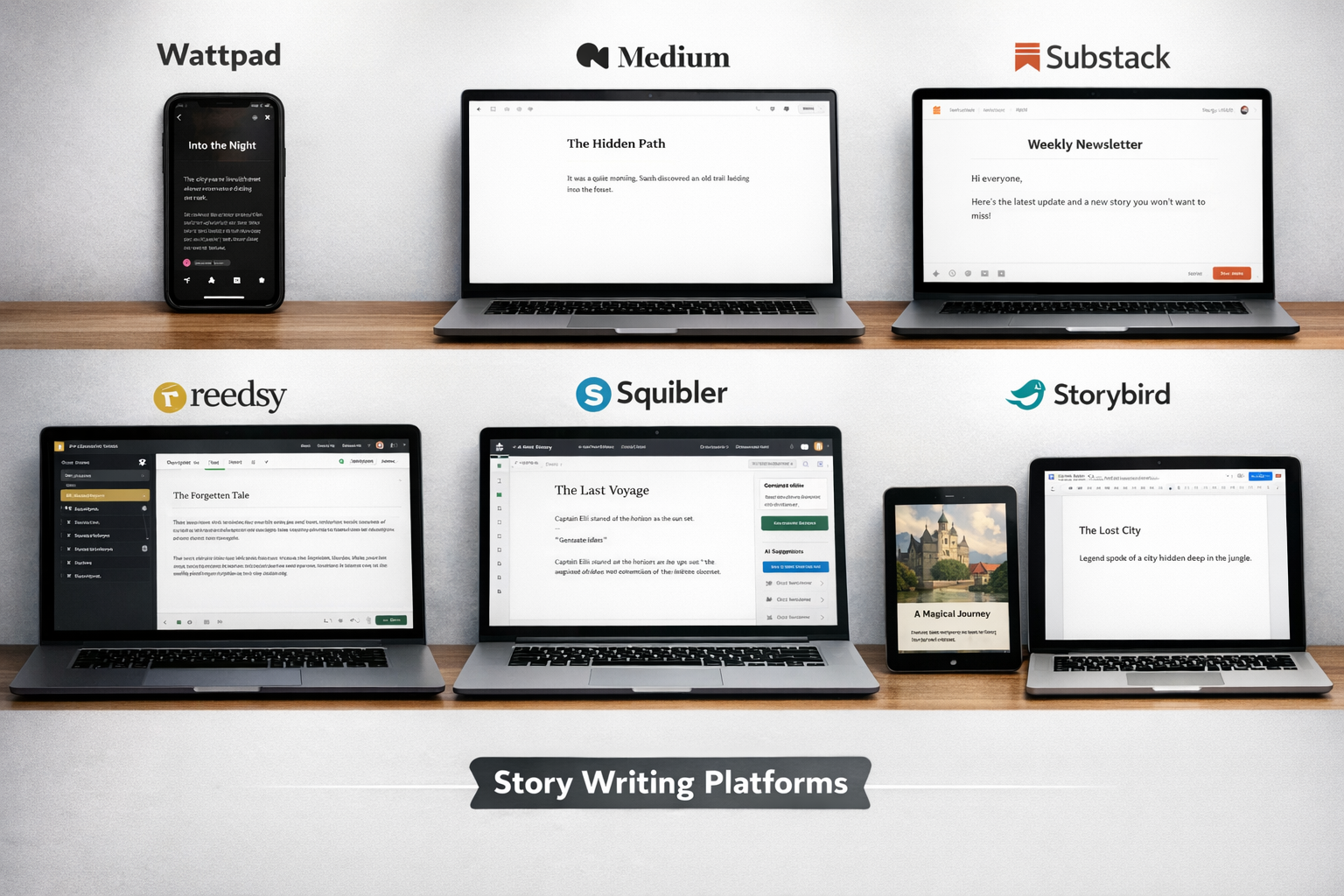
Best Writing a Story Websites: Top Platform Reviews
1. Wattpad 📚
Best for: Fiction writers seeking large, engaged audiences
Wattpad dominates the creative writing space with over 90 million monthly users and billions of story reads. This platform excels at serialized fiction, where writers publish stories chapter by chapter to build suspense and reader loyalty.
Key Features:
- Massive, active reader community
- Social features including comments, votes, and follows
- Mobile-optimized reading experience
- Contest opportunities with cash prizes
- Wattpad Books publishing program for top stories
Ideal Story Types: Young adult fiction, romance, fantasy, fan fiction, and serialized novels work exceptionally well on Wattpad’s platform.
2. Medium ✍️
Best for: Storytellers who blend narrative with insights
Medium offers a sophisticated platform for writers who want to combine storytelling with thought leadership. The platform’s algorithm promotes quality content, making it easier for good stories to find audiences organically.
Key Features:
- Clean, distraction-free writing interface
- Built-in monetization through Partner Program
- Professional audience interested in quality content
- SEO-friendly publishing that ranks well in search engines
- Publication system for themed content collections
Monetization Potential: Writers earn money based on member reading time, with top writers earning thousands monthly through the Partner Program.
3. Substack 📧
Best for: Writers building direct relationships with readers
Substack revolutionizes storytelling by combining email newsletters with web publishing. Writers can build subscriber lists and create recurring revenue through paid subscriptions for premium content.
Key Features:
- Email newsletter integration
- Subscription-based monetization model
- Direct reader relationships without algorithm dependence
- Podcast hosting capabilities
- Simple, elegant publishing interface
Success Strategy: Building compelling characters becomes crucial when readers pay for your content, as they expect consistent quality and engaging narratives.
4. Reedsy 🛠️
Best for: Serious writers seeking professional tools
Reedsy provides comprehensive writing and publishing tools designed for authors planning to self-publish or submit to traditional publishers. The platform connects writers with professional editors, designers, and marketers.
Key Features:
- Professional-grade writing editor
- Access to vetted freelance editors and designers
- Publishing guidance and resources
- Writing prompts and contests with cash prizes
- Book marketing tools and advice
Professional Development: The platform emphasizes mastering plot structure and other technical aspects that separate amateur from professional writing.
5. Squibler 🤖
Best for: Writers wanting AI assistance
Squibler combines traditional writing tools with artificial intelligence to help writers overcome common obstacles like writer’s block and plot development challenges.
Key Features:
- AI-powered writing suggestions
- Character and plot development tools
- Goal tracking and writing statistics
- Collaboration features for co-authors
- Export options for multiple formats
AI Integration: The platform helps writers who struggle with overcoming writer’s block by providing intelligent prompts and suggestions.
6. Storybird 🎨
Best for: Visual storytellers and beginners
Storybird uniquely combines storytelling with visual art, allowing writers to create illustrated stories using the platform’s extensive artwork library.
Key Features:
- Thousands of professional illustrations
- User-friendly interface perfect for beginners
- Educational tools for teachers and students
- Print-on-demand publishing options
- Community challenges and inspiration
7. Google Docs (Free Option) 📄
Best for: Writers prioritizing simplicity and collaboration
While not specifically designed for storytelling, Google Docs provides a reliable, free platform for writing and sharing stories with built-in collaboration features.
Key Features:
- Completely free with Google account
- Real-time collaboration capabilities
- Automatic saving and version history
- Easy sharing and commenting system
- Integration with other Google services
How to Choose the Right Story Writing Website
Selecting the perfect writing a story website depends on understanding your specific goals and writing style. Consider these essential factors before committing to a platform.
Define Your Primary Goal
Audience Building suits writers who want readers and feedback. Platforms like Wattpad and Medium excel at connecting writers with engaged communities who provide valuable input on story development.
Writing Tool Focus benefits writers who prefer distraction-free environments for creating first drafts. Simple platforms like Google Docs or Squibler emphasize functionality over social features.
Monetization Priority appeals to writers seeking income from their stories. Substack and Medium offer the strongest revenue potential through subscriptions and partnership programs.
Consider Your Story Type
Fiction Writers typically thrive on community-driven platforms where readers expect serialized content and character development. Creating relatable characters becomes especially important on these platforms.
Non-Fiction Storytellers often find success on professional platforms like Medium, where readers seek informative narratives and personal experiences.
Experimental Writers might prefer platforms with fewer restrictions and more creative freedom to explore unconventional storytelling formats.
Evaluate Platform Features
| Feature | Wattpad | Medium | Substack | Reedsy | Google Docs |
|---|---|---|---|---|---|
| Community | ⭐⭐⭐⭐⭐ | ⭐⭐⭐ | ⭐⭐ | ⭐⭐ | ⭐ |
| Writing Tools | ⭐⭐ | ⭐⭐⭐⭐ | ⭐⭐⭐ | ⭐⭐⭐⭐⭐ | ⭐⭐⭐ |
| Monetization | ⭐⭐ | ⭐⭐⭐⭐ | ⭐⭐⭐⭐⭐ | ⭐ | ⭐ |
| Ease of Use | ⭐⭐⭐⭐⭐ | ⭐⭐⭐⭐ | ⭐⭐⭐⭐ | ⭐⭐⭐ | ⭐⭐⭐⭐⭐ |
| Cost | Free | Free/Paid | Free/Paid | Free/Paid | Free |
Step-by-Step: Getting Started on Story Writing Websites
Step 1: Choose Your Platform
Select one platform initially rather than spreading efforts across multiple sites. Focus on mastering one platform’s features and community before expanding to others.
Research the audience by reading popular stories in your genre. Notice what writing styles, story lengths, and topics perform well on each platform.
Step 2: Create an Optimized Profile
Write a compelling bio that clearly states what types of stories you write and what readers can expect. Include your writing schedule if you plan regular updates.
Choose an appropriate profile picture that reflects your writing persona. Professional headshots work well for serious platforms like Medium, while creative avatars suit community platforms like Wattpad.
Step 3: Plan Your First Story
Start with a strong concept that fits your chosen platform’s audience. Crafting engaging story ideas requires understanding what resonates with your target readers.
Outline your story structure before publishing. Even for serialized platforms, having a general direction prevents plot holes and inconsistencies.
Step 4: Publish Strategically
Hook readers immediately with compelling opening lines that establish conflict or intrigue within the first paragraph.
Use platform-specific formatting to optimize readability. Short paragraphs work better on mobile-focused platforms like Wattpad, while longer paragraphs suit desktop-oriented sites like Medium.
Step 5: Engage Consistently
Respond to reader comments promptly and thoughtfully. Building relationships with readers creates loyal followers who eagerly await your next story.
Maintain a regular posting schedule that readers can depend on. Consistency builds anticipation and keeps your stories visible in platform algorithms.
Tips for Success on Story Writing Websites
Master Platform-Specific Strategies
Wattpad Success requires understanding the serialized format. End chapters with cliffhangers that compel readers to continue. Use eye-catching cover images and optimize tags for discoverability.
Medium Growth depends on quality over quantity. Focus on well-researched, thoughtfully written pieces that provide value beyond entertainment. Engage with other writers’ work to build network connections.
Substack Building emphasizes email list growth. Offer exclusive content to subscribers and maintain consistent newsletter schedules to build reader loyalty.
Develop Your Unique Voice
Authenticity resonates more than trying to mimic popular writers. Readers gravitate toward genuine voices that offer fresh perspectives on familiar themes.
Experiment with different styles until you find what feels natural. Mastering tone in writing helps establish a distinctive voice that readers remember.
Study Successful Stories
Analyze top-performing content in your genre to understand what elements contribute to success. Notice how successful writers structure their stories, engage with readers, and maintain momentum.
Learn from feedback patterns in comments and reviews. Reader responses reveal what works and what doesn’t in your storytelling approach.
Common Mistakes to Avoid
Publishing Without Editing
Rushed publishing damages credibility and reader trust. Even on casual platforms, basic proofreading and editing improve story quality significantly.
Grammar and spelling errors distract readers from your story’s content. Use built-in editing tools or external grammar checkers before publishing.
Ignoring Platform Culture
Each platform has unwritten rules about content, interaction styles, and posting frequency. Observe successful writers to understand these cultural norms.
Generic approaches fail across different platforms. Tailor your content and engagement style to match each platform’s unique community expectations.
Inconsistent Publishing
Irregular posting schedules cause readers to lose interest and move on to more reliable writers. Set realistic publishing goals you can maintain long-term.
Abandoned stories frustrate readers who invested time in your narrative. If you must pause a story, communicate with your audience about your plans.
Monetization Opportunities on Writing Platforms
Direct Platform Revenue
Medium Partner Program pays writers based on member reading time and engagement. Top writers earn substantial monthly income through quality content that keeps readers engaged.
Substack Subscriptions allow writers to charge monthly fees for premium content. Successful newsletter writers build sustainable income streams through loyal subscriber bases.
Wattpad Opportunities include the Wattpad Books program, which offers publishing contracts to popular stories, and brand partnership opportunities for established writers.
Indirect Monetization Strategies
Audience Building on free platforms creates valuable email lists and social media followings that writers can monetize through book sales, courses, or consulting services.
Portfolio Development showcases writing skills to potential clients seeking freelance writers, copywriters, or content creators.
Publishing Preparation helps writers develop and test material before self-publishing or submitting to traditional publishers.
Understanding how to market your writing skills becomes crucial when transitioning from platform writing to broader monetization strategies.
Advanced Strategies for Platform Success
Cross-Platform Promotion
Strategic platform combinations maximize reach without overwhelming your capacity. Many successful writers use Wattpad for audience building, Medium for thought leadership, and Substack for monetization.
Content adaptation allows you to repurpose stories across platforms with appropriate modifications for each audience and format.
Community Leadership
Participating in platform contests increases visibility and provides networking opportunities with other writers and platform representatives.
Supporting other writers through genuine engagement and feedback builds reciprocal relationships that benefit everyone involved.
Analytics and Optimization
Track performance metrics available on each platform to understand what content resonates with your audience. Use this data to refine your writing and posting strategies.
A/B testing different approaches to titles, posting times, and story structures helps optimize your content for maximum engagement.
Conclusion
The landscape of story writing websites in 2026 offers unprecedented opportunities for writers at every level. From Wattpad’s massive community to Medium’s professional monetization, each platform serves specific writer needs and goals.
Success on any writing a story website requires understanding your audience, maintaining consistency, and engaging authentically with readers. The platform you choose matters less than your commitment to regular publishing and community participation.
Take action today by selecting one platform that aligns with your goals and publishing your first story. Whether you’re sharing a short piece on Medium or beginning a serialized novel on Wattpad, the most important step is starting.
Remember that developing a consistent writing habit will serve you better than perfect platform selection. Choose a writing a story website that excites you, create your account, and begin sharing your unique voice with the world.
The digital publishing revolution has democratized storytelling—now it’s your turn to be part of it.


