

Every great novelist started somewhere—often with a dog-eared copy of a writing guide and an unshakeable belief in their story. Whether you’re crafting your first short story or polishing your tenth novel, the right books on writing fiction can transform your raw creativity into compelling narratives that captivate readers and stand the test of time.
The world of fiction writing has evolved dramatically, but the fundamental principles remain constant. Today’s aspiring authors have access to decades of wisdom from master storytellers, editors, and writing coaches who’ve distilled their expertise into practical guides. These resources offer more than just advice—they provide roadmaps for navigating the complex terrain of character development, plot structure, dialogue, and the countless other elements that separate good stories from unforgettable ones.
Key Takeaways
• Classic writing guides like Stephen King’s “On Writing” and Anne Lamott’s “Bird by Bird” remain essential foundations for any fiction writer’s library
• Specialized craft books focusing on character development, plot structure, and dialogue provide targeted improvement in specific areas
• Modern writing resources address contemporary challenges like genre conventions, publishing landscapes, and digital storytelling techniques
• Practical application matters more than theory—the best books on writing fiction combine instruction with actionable exercises
• Building a comprehensive library of writing resources creates an ongoing reference system for continuous improvement throughout your writing journey
Foundational Books on Writing Fiction Every Author Needs
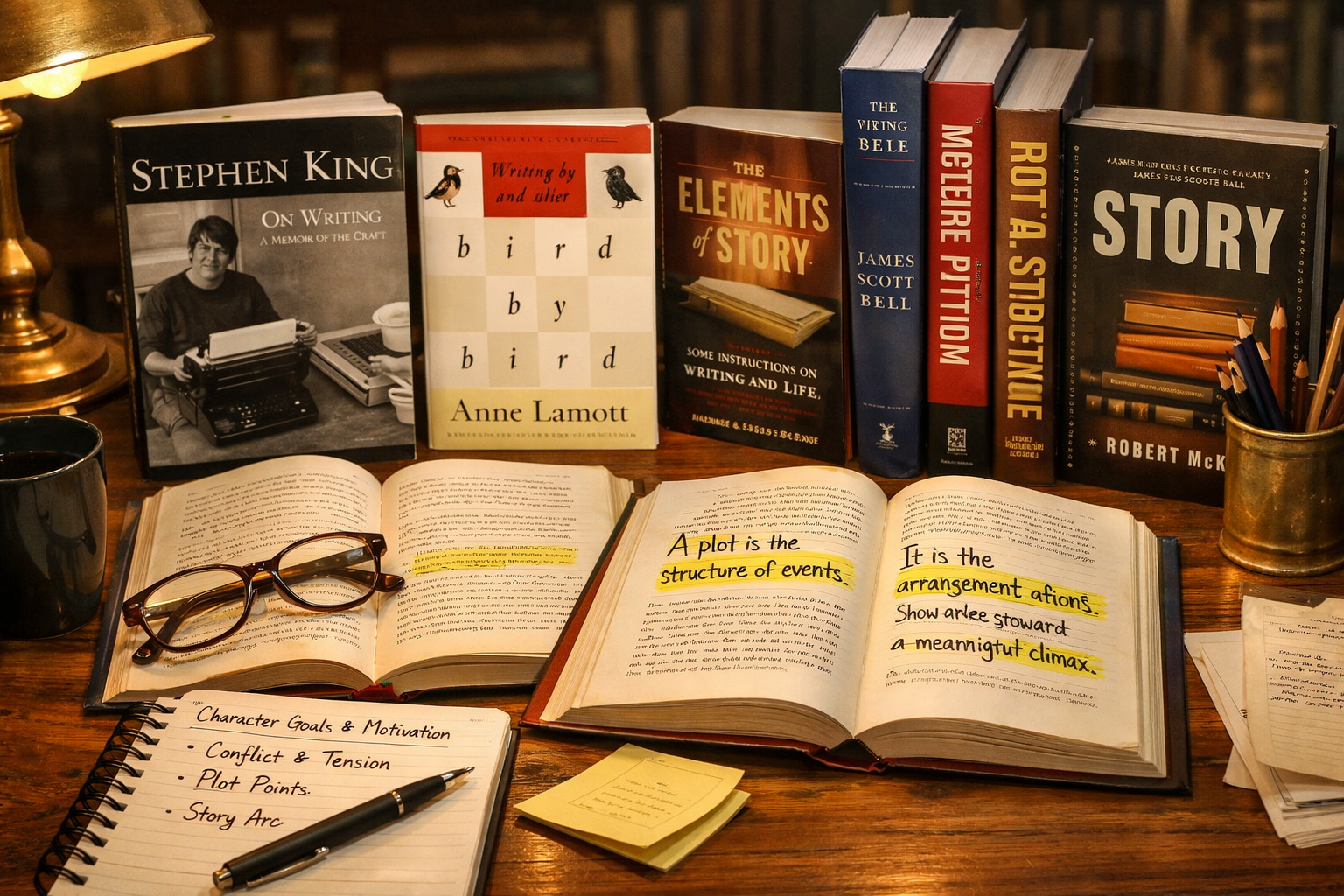
The cornerstone of any fiction writer’s education begins with time-tested classics that have guided countless authors to success. These foundational books on writing fiction offer universal principles that transcend genre boundaries and remain relevant regardless of publishing trends.
Stephen King’s “On Writing: A Memoir of the Craft” stands as perhaps the most beloved writing guide of the past quarter-century. King masterfully blends personal memoir with practical advice, offering insights into his writing process while demystifying the craft. His emphasis on reading voraciously, writing daily, and trusting the story to unfold naturally resonates with writers across all experience levels.
Anne Lamott’s “Bird by Bird” provides an emotionally honest look at the writing life, addressing both craft and the psychological challenges writers face. Lamott’s concept of “shitty first drafts” has liberated countless authors from perfectionism, while her guidance on character development and finding your authentic voice remains invaluable.
For those seeking comprehensive craft instruction, John Gardner’s “The Art of Fiction” delivers rigorous technical guidance on prose style, narrative techniques, and the moral dimension of storytelling. Though more academic in tone, Gardner’s insights into the mechanics of fiction writing provide essential knowledge for serious practitioners.
These foundational texts work together to create a solid base for understanding both the artistic and practical aspects of fiction writing. They address the essential traits successful fiction writers need while providing actionable strategies for improvement.
Character Development and Dialogue Mastery
Creating memorable characters who speak with authentic voices represents one of fiction’s greatest challenges. Specialized books on writing fiction that focus on these elements can dramatically improve your storytelling effectiveness.
Orson Scott Card’s “Characters and Viewpoint” offers systematic approaches to character creation, from initial conception through full development. Card explains how to build characters with compelling motivations, realistic flaws, and distinct personalities that drive plot naturally. His techniques for choosing and maintaining consistent viewpoints help writers avoid common narrative pitfalls.
For dialogue specifically, Gloria Kempton’s “Dialogue” provides comprehensive guidance on making conversations sound natural while advancing plot and revealing character. Kempton covers everything from dialogue tags and formatting to subtext and regional speech patterns. Her exercises help writers develop an ear for authentic speech rhythms.
Janet Fitch’s “The Writer’s Studio” combines character development with advanced prose techniques, showing how great writers create unforgettable personalities through carefully chosen details and revealing actions. Fitch’s analysis of published works demonstrates how masters of the craft bring characters to life on the page.
These specialized guides complement broader writing instruction by diving deep into specific craft elements. They provide the detailed knowledge needed for developing compelling fictional characters and building believable personalities that readers will remember long after finishing your story.
Understanding character psychology and motivation becomes easier when you have structured approaches to explore your characters’ backgrounds, desires, and conflicts. These books provide frameworks for creating complex, three-dimensional people rather than flat archetypes.
Plot Structure and Story Architecture
Compelling plots don’t happen by accident—they result from understanding fundamental story structures and applying them skillfully. The best books on writing fiction in this category teach both classical and contemporary approaches to narrative architecture.
Robert McKee’s “Story” remains the definitive guide to story structure, originally written for screenwriters but equally valuable for novelists. McKee breaks down the elements of compelling narratives, from inciting incidents through climactic moments, showing how successful stories create and resolve dramatic tension. His analysis of story values and character arcs provides deep insight into what makes plots work.
Christopher Vogler’s “The Writer’s Journey” adapts Joseph Campbell’s hero’s journey for modern storytellers, offering a flexible template for adventure and personal transformation narratives. While not every story follows this pattern, understanding the mythic structure helps writers recognize universal story elements that resonate with readers.
For more contemporary approaches, Lisa Cron’s “Wired for Story” combines neuroscience research with storytelling principles, explaining how our brains process narrative and what keeps readers engaged. Cron’s insights into cognitive processing help writers craft stories that feel naturally compelling.
Blake Snyder’s “Save the Cat! Writes a Novel” adapts successful screenwriting techniques for fiction writers, providing practical beat sheets and structural templates. While some critics argue against formulaic approaches, Snyder’s methods help beginning writers understand pacing and story rhythm.
These structural guides work best when combined with practical application. Understanding the fundamentals of plotting in fiction helps writers avoid common mistakes while developing their unique storytelling voice.
Genre-Specific Writing Guides
Different fiction genres have distinct conventions, reader expectations, and storytelling approaches. Specialized books on writing fiction for specific genres help authors understand and master these unique requirements.
Writing Fantasy and Science Fiction benefits from guides like Orson Scott Card’s “Writing Fantasy and Science Fiction” and Ursula K. Le Guin’s “Steering the Craft.” These authors address worldbuilding challenges, magic systems, technological speculation, and the balance between fantastical elements and relatable human experiences.
Mystery and Thriller Writers should explore P.D. James’s “Talking About Detective Fiction” and James N. Frey’s “How to Write a Damn Good Mystery.” These guides cover plotting techniques specific to suspense, managing clues and red herrings, and creating satisfying revelations.
Romance Writers can benefit from specialized craft books that address emotional pacing, character chemistry, and genre expectations. Understanding romance conventions helps writers deliver the emotional satisfaction readers seek while finding fresh approaches to familiar themes.
Literary Fiction has its own considerations, often focusing more on prose style, thematic depth, and character psychology than plot mechanics. Books addressing literary techniques help writers balance artistic ambition with reader engagement.
Young Adult Fiction requires understanding teenage psychology, contemporary issues, and age-appropriate content while maintaining sophisticated storytelling. Specialized guides help authors navigate these unique challenges effectively, including understanding the vital elements of compelling YA fiction.
Genre expertise develops through reading widely within your chosen category and understanding what readers expect while finding opportunities for innovation and fresh perspectives.
Modern Writing Craft and Contemporary Techniques
The publishing landscape continues evolving, and contemporary books on writing fiction address current challenges and opportunities facing today’s authors. These resources help writers navigate modern publishing realities while honing their craft.
Craft Evolution reflects changes in reader preferences, attention spans, and storytelling mediums. Books like Jane Alison’s “Meander, Spiral, Explode” challenge traditional narrative structures, exploring alternative ways to organize stories that reflect contemporary life’s complexity.
Digital Age Considerations include understanding how readers consume fiction across different platforms and formats. Some guides address writing for serialized publication, interactive storytelling, or multimedia integration while maintaining strong fundamental craft.
Diverse Voices and Perspectives receive increased attention in contemporary writing guides, with resources addressing authentic representation, cultural sensitivity, and inclusive storytelling approaches. These books help writers expand their perspectives while avoiding harmful stereotypes.
Publishing Industry Changes affect how writers approach their craft, with some guides addressing the balance between artistic vision and market considerations. Understanding contemporary publishing helps writers make informed decisions about their work.
Writing Community and Support resources help authors connect with other writers, find critique partners, and build professional networks. The writing life has become less solitary, with online communities and virtual workshops expanding opportunities for learning and growth.
Modern writers benefit from understanding both timeless craft principles and contemporary applications. Building strong writing skills requires adapting classical techniques to current contexts while maintaining focus on fundamental storytelling excellence.
Building Your Personal Writing Library
Creating an effective collection of books on writing fiction requires strategic selection based on your current skill level, writing goals, and areas needing improvement. A well-curated library becomes an ongoing resource for continuous development.
Essential Categories for any fiction writer’s library include:
- Foundation texts covering general craft principles
- Specialized guides for character, plot, and dialogue
- Genre-specific resources matching your writing interests
- Style and prose guides for sentence-level improvement
- Publishing and career guidance for professional development
- Inspiration and motivation books for sustaining long-term commitment
Progressive Learning involves starting with foundational texts before moving to specialized or advanced guides. Beginning writers benefit most from comprehensive overviews before diving into specific techniques or genre conventions.
Reference vs. Study materials serve different purposes. Some books work best as intensive study guides with exercises and practical applications, while others function as ongoing references for specific questions or challenges.
Budget Considerations make library building more manageable when approached systematically. Prioritize essential texts first, then expand based on specific needs and interests. Many excellent writing guides remain available in affordable editions.
Digital vs. Physical formats each offer advantages. Physical books allow easier note-taking and cross-referencing, while digital versions offer search functionality and portability. Many writers maintain hybrid libraries combining both formats.
Successful writers often develop consistent writing habits that include regular study of craft resources alongside active writing practice. Your library should support both learning and practical application.
Practical Application and Writing Exercises
The most valuable books on writing fiction combine instruction with practical exercises that help writers immediately apply new concepts. Understanding theory means little without hands-on practice and skill development.
Exercise-Based Learning accelerates improvement by providing structured practice opportunities. Books like “The Writer’s Workout” by Christina Katz offer daily exercises targeting specific skills, while “What If?” by Anne Bernays provides creative prompts for exploring different techniques.
Analytical Reading becomes more effective when guided by craft books that teach writers how to study published works. Learning to analyze successful fiction helps writers understand how techniques work in practice rather than just theory.
Writing Challenges help maintain momentum and explore new approaches. Many craft books include progressive exercises that build complexity gradually, allowing writers to develop skills systematically rather than randomly.
Revision Techniques receive attention in practical guides that teach writers how to improve their work through multiple drafts. Understanding revision as a separate skill from initial composition helps writers approach editing more effectively.
Feedback Integration skills help writers use critique groups, beta readers, and professional editing more effectively. Learning how to evaluate and implement feedback becomes crucial for long-term improvement.
Writers who overcome creative blocks often benefit from practical exercises that generate new ideas and maintain creative flow. Regular practice with guided exercises helps maintain writing momentum even during challenging periods.
Advanced Craft and Professional Development
As writers develop their skills, advanced books on writing fiction address sophisticated techniques and professional considerations that separate amateur from professional work.
Advanced Technique Books explore complex narrative strategies, experimental structures, and sophisticated prose techniques. These resources help experienced writers push beyond basic competency toward mastery and artistic distinction.
Professional Development guides address the business aspects of writing careers, from manuscript submission through marketing and author platform building. Understanding the professional landscape helps writers make informed career decisions.
Teaching and Mentoring resources help experienced writers share their knowledge with others, often deepening their own understanding through explanation and analysis. Many successful authors find that teaching improves their own craft.
Cross-Disciplinary Learning brings insights from psychology, neuroscience, anthropology, and other fields into fiction writing. Advanced writers often benefit from understanding human behavior, cultural patterns, and cognitive processing as they relate to storytelling.
Experimental Approaches challenge conventional wisdom and encourage innovation within established forms. Advanced craft books often explore how successful writers break rules effectively while maintaining reader engagement.
Professional writers understand that mastering point of view and developing strong authorial presence requires ongoing study and practice. Advanced resources provide the sophisticated guidance needed for continued growth.
Conclusion
The journey from aspiring writer to published author requires dedication, practice, and continuous learning. The right books on writing fiction provide essential guidance, but success ultimately depends on applying these lessons through consistent writing practice. Whether you’re just beginning your fiction writing journey or seeking to refine advanced techniques, building a comprehensive library of craft resources creates a foundation for lifelong improvement.
Start with foundational texts that cover general principles, then expand into specialized areas matching your interests and needs. Remember that reading about writing techniques means nothing without practical application—the best craft books combine instruction with exercises that help you immediately implement new skills.
Your next steps should include:
📚 Selecting 2-3 foundational books from the essential category to begin building your craft library
✍️ Implementing daily writing practice alongside your craft study to reinforce learning through application
🎯 Identifying specific skill areas where you need improvement and seeking targeted resources
📖 Reading extensively in your chosen genre to understand successful techniques in action
🔄 Establishing a revision process that incorporates lessons learned from craft guides
The best writers never stop learning. Your investment in quality craft resources, combined with persistent practice and willingness to revise, will steadily improve your fiction writing abilities. Start today with one excellent book and begin transforming your storytelling potential into compelling narratives that engage and inspire readers.


