

Every year, millions of people dream about writing the next bestseller that will transform their financial future. But does writing a book make money in reality? The answer might surprise you. While some authors do achieve significant financial success, the vast majority earn far less than expected—and many never recoup their initial investment.
The romanticized image of wealthy authors living off royalty checks doesn’t match the modern publishing landscape. Most successful authors today treat book writing as part of a larger business strategy rather than a standalone path to riches. Understanding the real economics of book publishing can help aspiring writers set realistic expectations and develop strategies that actually generate income.
Key Takeaways
• Most authors don’t get rich from a single book — successful writers typically need multiple books and diverse income streams
• Self-published authors keep higher royalties (35-70%) but handle all marketing themselves, while traditionally published authors get advances but lower royalties (8-15%)
• The average first-time author earns less than $1,000 from their book, though strategic authors can build sustainable income over time
• Books often serve as marketing tools that lead to higher-paying opportunities like speaking, consulting, and course creation
• Success depends more on marketing and audience-building than writing quality alone
Does Writing a Book Make Money? The Short Answer
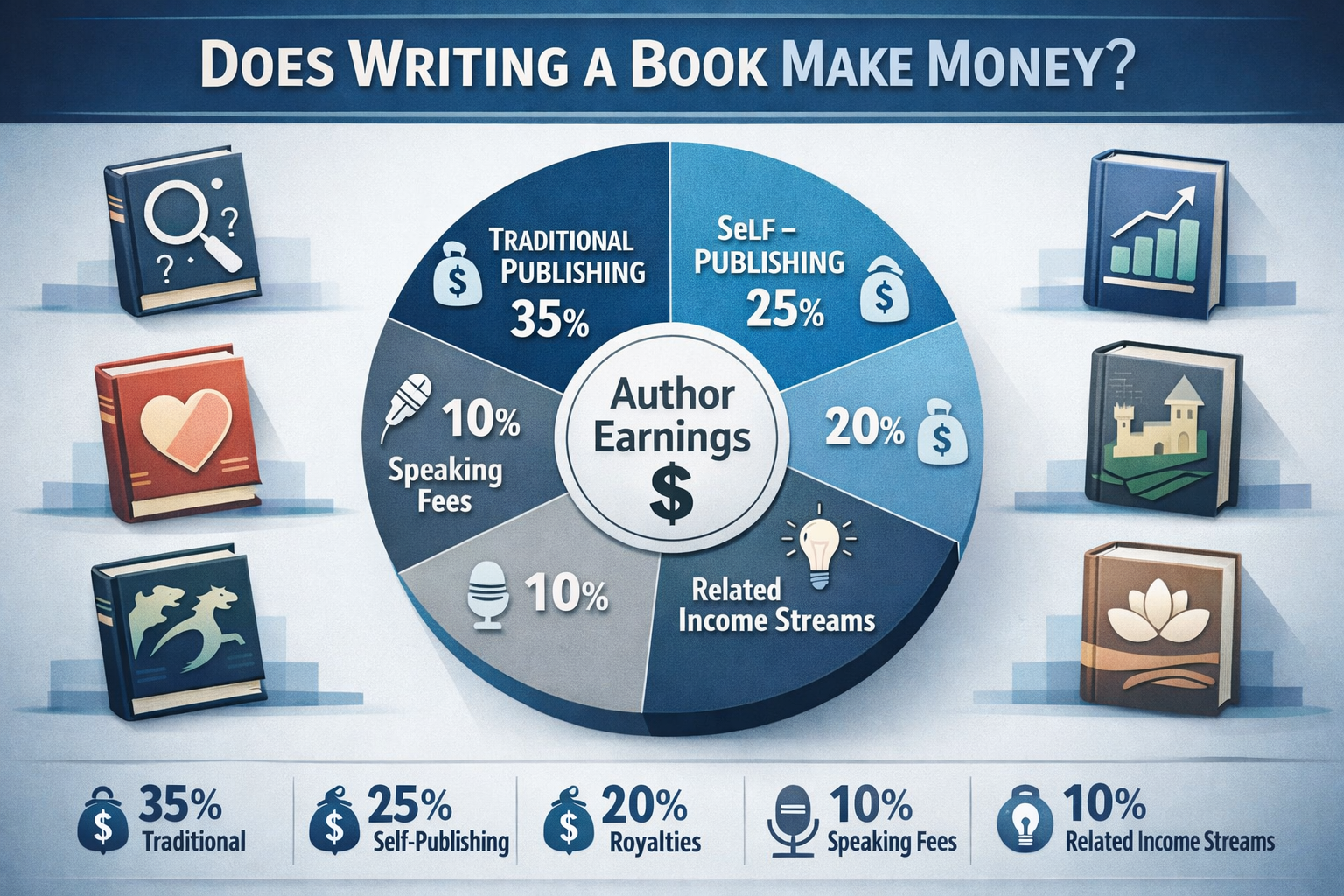
Yes, writing a book can make money, but success depends heavily on strategy, marketing, and realistic expectations. The publishing industry has changed dramatically in recent years, creating both new opportunities and challenges for authors.
Most authors don’t become wealthy from their first book. According to industry surveys, the median income for published authors is less than $6,000 per year from their writing. However, this statistic includes many hobby writers and doesn’t reflect the potential for strategic authors who approach publishing as a business.
The difference between profitable and unprofitable authors often comes down to three factors:
- Strategic topic selection based on market demand
- Consistent marketing efforts before, during, and after publication
- Multiple revenue streams beyond just book sales
Authors who treat their book as one component of a larger business model—rather than expecting it to generate income independently—tend to achieve better financial results. Learning effective book marketing strategies becomes crucial for authors serious about earning money from their writing.
How Authors Make Money from Books
Understanding the various income streams available to authors helps explain why some books generate significant revenue while others don’t. Modern authors have access to multiple monetization methods that didn’t exist even a decade ago.
Primary Income Sources
Book Sales Revenue remains the most obvious income stream, but it’s rarely the most profitable. Authors earn money through:
- Physical book sales (paperback and hardcover)
- Digital book sales (Kindle, Apple Books, etc.)
- Audiobook sales and subscription services
- Bulk sales to corporations or educational institutions
Royalty Percentages vary significantly by publishing method:
- Self-published eBooks: 35-70% royalties
- Traditional publishing: 8-15% royalties after earning back advances
- Audiobooks: 10-35% depending on platform and exclusivity
Secondary Revenue Streams
Many successful authors generate more income from book-related opportunities than from the books themselves:
- Speaking engagements at conferences and corporate events
- Online courses teaching the book’s concepts
- Consulting or coaching services in their expertise area
- Licensing deals for international markets or adaptations
Authors who self-publish must do more than just write, often developing these additional income streams to create sustainable businesses around their books.
How Much Money Do Authors Actually Make?
The financial reality for most authors falls far short of bestseller dreams. Understanding typical earnings helps set realistic expectations for aspiring writers.
First-Time Author Earnings
Traditional Publishing:
- Average advance: $1,000-$10,000 for debut authors
- Most books never earn beyond their advance
- Only 20% of traditionally published books earn back their advance
Self-Publishing:
- 50% of self-published authors earn less than $500 per year
- Top 10% of self-published authors earn $10,000+ annually
- Success often takes 2-3 years of consistent publishing
Income by Experience Level
| Author Experience | Annual Income Range | Key Factors |
|---|---|---|
| Beginner (0-1 books) | $0-$1,000 | Learning curve, no audience |
| Developing (2-5 books) | $1,000-$10,000 | Building readership, improving skills |
| Established (6+ books) | $10,000-$100,000+ | Loyal audience, multiple income streams |
The authors earning six-figure incomes typically have 10+ published books and treat writing as a full-time business. They invest heavily in professional book marketing and audience development.
Factors That Determine Whether a Book Makes Money
Several key elements separate profitable books from those that struggle financially. Understanding these factors helps authors make strategic decisions that improve their earning potential.
Market Demand and Topic Selection
High-demand topics consistently outperform literary fiction in terms of sales:
- Self-help and personal development
- Business and entrepreneurship
- Health and wellness
- How-to guides and tutorials
Books that solve specific problems for readers tend to generate more sales than those written purely for artistic expression. Writing incredible non-fiction books requires understanding what readers actively seek.
Author Platform and Audience Size
Pre-existing audience dramatically impacts book success:
- Authors with 10,000+ email subscribers see 5x higher sales
- Social media following translates to book sales when properly leveraged
- Industry expertise and credibility drive both sales and speaking opportunities
Publishing Quality and Professional Presentation
Professional standards affect reader perception and sales:
- Professional editing and proofreading
- Eye-catching cover design
- Proper book formatting for different platforms
- Strategic pricing and positioning
Books that look and read professionally compete better in crowded marketplaces, regardless of publishing method.
Self-Publishing vs Traditional Publishing Income
The choice between self-publishing and traditional publishing significantly impacts potential earnings and required effort levels.
Self-Publishing Advantages
Higher Royalty Rates:
- Amazon KDP: 35% or 70% royalties depending on price
- Other platforms: 40-60% typical royalty rates
- Authors keep all rights and control pricing
Faster Time to Market:
- Publish within weeks instead of years
- Immediate access to sales data and reader feedback
- Ability to update and revise content quickly
Complete Creative Control:
- Choose your own cover design and marketing approach
- Set your own publication schedule
- Keep all subsidiary rights (audiobook, foreign, etc.)
However, self-publishing success requires significant marketing effort that many authors underestimate.
Traditional Publishing Benefits
Professional Support System:
- Experienced editors and marketing teams
- Established distribution networks
- Potential for bookstore placement
Advance Payments:
- Upfront money before publication
- Professional validation of your work
- Reduced financial risk for authors
Industry Credibility:
- Easier to secure speaking engagements
- Media coverage and review opportunities
- Prestige factor for career advancement
Understanding the pros and cons of traditional publishing helps authors choose the best path for their goals and circumstances.
How Many Books You Usually Need to Make Good Money
Most financially successful authors publish multiple books rather than relying on a single bestseller. Building a catalog of related books creates compound earning effects that single books rarely achieve.
The Power of Multiple Books
Increased Discoverability:
- Each new book introduces readers to your previous works
- Cross-promotion between books amplifies marketing efforts
- Algorithm benefits on platforms like Amazon reward prolific authors
Compound Revenue Growth:
- Book #1 might earn $1,000 annually
- Books #1-3 together might earn $10,000 annually
- Books #1-10 together might earn $50,000+ annually
Series and Related Content Strategy
Fiction Series Benefits:
- Readers who finish book one often buy the entire series
- Higher lifetime customer value per reader
- Stronger emotional connection with characters and stories
Non-Fiction Topic Clusters:
- Establish expertise in specific niches
- Cross-sell related topics to the same audience
- Build authority that leads to speaking and consulting opportunities
Successful authors typically plan 3-5 book series or topic clusters rather than writing random, unconnected books. This strategic approach maximizes the earning potential of each individual title.
Other Ways Writing a Book Can Make Money
While book sales provide direct income, many authors discover that their books open doors to higher-paying opportunities they never anticipated.
Speaking and Event Opportunities
Corporate Speaking Engagements:
- Fees range from $2,500-$25,000+ per event
- Book serves as credibility builder and marketing tool
- Topics related to business, leadership, and personal development command highest fees
Conference Presentations:
- Industry conferences pay $1,000-$10,000+ for expert speakers
- Books establish expertise and thought leadership
- Networking opportunities lead to additional business
Educational and Training Revenue
Online Course Creation:
- Transform book content into video courses
- Platforms like Udemy and Teachable enable passive income
- Course sales often exceed book sales significantly
Workshops and Seminars:
- In-person training commands premium pricing
- Books provide curriculum foundation and marketing materials
- Corporate training contracts can be extremely lucrative
Consulting and Coaching Services
One-on-One Consulting:
- Hourly rates of $150-$500+ for established experts
- Books demonstrate knowledge and attract ideal clients
- Recurring revenue from ongoing client relationships
Group Coaching Programs:
- Monthly or quarterly programs serving multiple clients
- Higher profit margins than individual consulting
- Books serve as lead magnets for program enrollment
Many authors find that these secondary income streams eventually surpass their book royalties, making the initial book investment worthwhile even if direct sales remain modest.
Tips for Writing a Book That Actually Makes Money
Strategic authors approach book writing with specific tactics designed to maximize earning potential from day one.
Choose Profitable Topics
Research Market Demand:
- Use Amazon’s bestseller lists to identify popular categories
- Analyze keyword search volume for potential book topics
- Study successful books in your chosen niche
Solve Real Problems:
- Focus on pain points your target audience actively experiences
- Provide actionable solutions rather than theoretical concepts
- Test your ideas with potential readers before writing
Build Your Platform First
Develop an Email List:
- Start collecting subscriber emails months before publication
- Offer valuable free content related to your book topic
- Aim for 1,000+ subscribers before launching your book
Establish Social Media Presence:
- Choose 1-2 platforms where your target readers spend time
- Share valuable content consistently to build authority
- Learn how to earn money using social media to amplify your book’s reach
Plan Multiple Books
Create a Series or Topic Cluster:
- Plan 3-5 related books before writing the first one
- Each book should stand alone while connecting to others
- Design covers and titles that clearly show the relationship
Develop Complementary Content:
- Workbooks and companion guides
- Audio versions and supplementary materials
- Updated editions and expanded content
Invest in Professional Quality
Professional Editing:
- Hire experienced editors familiar with your genre
- Budget $1,000-$5,000 for professional editing services
- Poor editing destroys credibility and sales potential
Eye-Catching Cover Design:
- Invest $300-$800 in professional cover design
- Ensure covers look good as small thumbnails online
- Study bestselling books in your category for design inspiration
Strategic Launch Planning:
- Plan your book launch months in advance
- Coordinate marketing across multiple channels
- Build anticipation with pre-orders and early reviews
Conclusion
Does writing a book make money? The answer depends entirely on your approach, expectations, and commitment to treating book publishing as a business rather than a hobby. While most authors don’t achieve significant wealth from their first book, those who approach writing strategically can build sustainable income over time.
The key to financial success lies in understanding that books often serve as powerful marketing tools that open doors to higher-paying opportunities. Speaking engagements, consulting contracts, online courses, and coaching programs frequently generate more income than book sales themselves.
Realistic expectations are crucial. Plan for your first book to earn modest income while serving as the foundation for a larger business. Focus on solving real problems for specific audiences, invest in professional quality, and commit to publishing multiple related books over time.
For aspiring authors serious about earning money from their writing, success comes from combining quality content with strategic marketing, professional presentation, and patience. The authors earning substantial income from their books typically have multiple published works, established audiences, and diverse revenue streams that extend far beyond royalty checks.
Start with realistic goals, focus on serving your readers exceptionally well, and view your first book as the beginning of a longer journey rather than a destination. With the right strategy and persistence, writing books can indeed become a profitable venture.


