

Picture this: Stephen King wrote Carrie in just three months, while J.R.R. Tolkien spent over 12 years crafting The Lord of the Rings. This dramatic difference highlights one of the most common questions aspiring writers ask: how long does it take an author to write a book? The answer isn’t simple, as writing timelines vary dramatically based on numerous factors including experience, genre, research requirements, and personal circumstances.
Understanding realistic timeframes can help new authors set proper expectations and develop effective writing strategies. Some writers complete their manuscripts in a matter of months, while others dedicate years to their craft before reaching “The End.”
Key Takeaways
• Most books take 6 months to 2 years to complete, depending on length, complexity, and the author’s writing schedule
• Experience level significantly impacts speed – seasoned authors typically write faster than beginners
• Genre and research requirements heavily influence completion time, with academic books taking much longer than simple guides
• Daily writing habits and consistency matter more than sporadic bursts of intensive writing
• First-time authors should focus on finishing rather than perfecting during the initial draft
The Average Time It Takes to Write a Book
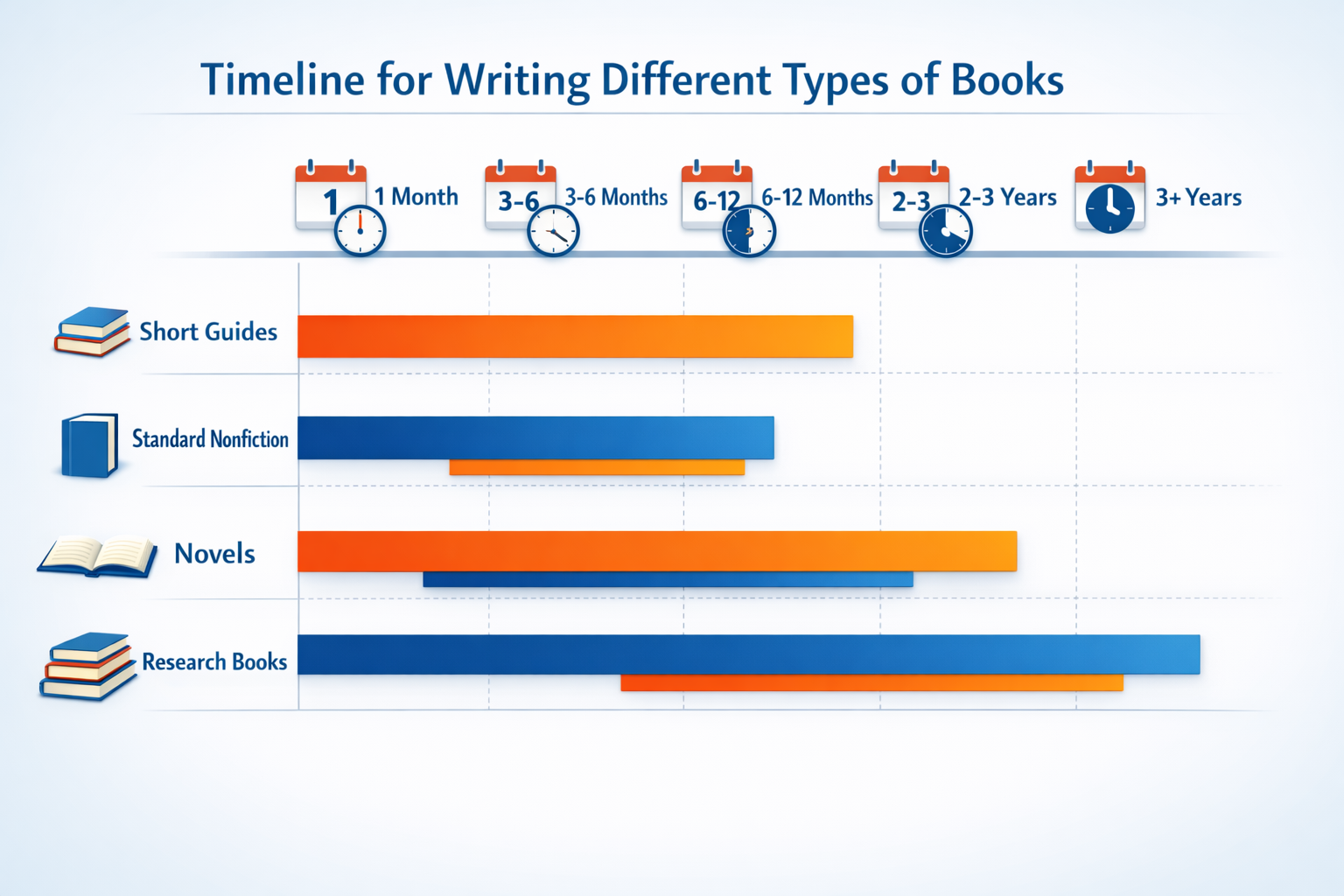
When examining how long it takes an author to write a book, most publishing industry experts agree that six months to two years represents the typical range for completing a manuscript. However, this broad timeframe encompasses significant variation based on multiple factors.
Professional authors who write full-time often complete books more quickly due to their established routines, refined processes, and accumulated experience. Many successful novelists aim to publish one book per year, which means completing their manuscripts in 6-9 months when accounting for editing and revision time.
Part-time writers naturally require longer periods, often taking 12-24 months to finish their first draft. This extended timeline reflects the reality that most aspiring authors must balance writing with full-time jobs, family responsibilities, and other commitments.
Industry surveys reveal interesting patterns:
- 40% of authors complete their books within 6-12 months
- 35% require 1-2 years for completion
- 15% finish in under 6 months
- 10% take more than 2 years
These statistics demonstrate that while variation exists, most authors fall within predictable timeframes when they maintain consistent writing habits.
Factors That Affect How Long It Takes to Write a Book
Writing Experience 📚
Experience dramatically influences how long it takes an author to write a book. Seasoned writers benefit from:
- Established writing routines that maximize productivity
- Refined editing skills that reduce revision time
- Better planning abilities that prevent major structural problems
- Confidence in their voice that eliminates excessive self-doubt
First-time authors often struggle with perfectionism, constantly revising early chapters instead of pushing forward to complete their first draft. Experienced writers understand that finishing a imperfect manuscript beats never completing a perfect one.
Book Length 📏
Length directly correlates with completion time:
| Book Type | Typical Word Count | Estimated Timeline |
|---|---|---|
| Short Guide | 10,000-25,000 words | 1-3 months |
| Standard Nonfiction | 50,000-70,000 words | 3-9 months |
| Novel | 70,000-100,000 words | 6-18 months |
| Epic Fantasy | 100,000+ words | 12-24 months |
Writers producing 500-1,000 words daily can estimate their completion timeline by dividing their target word count by their daily output.
Genre Requirements 🎭
Different genres demand varying amounts of work:
Fiction requires extensive character development, plot structuring, and world-building. Creating believable characters and maintaining narrative consistency throughout a novel presents unique challenges that can extend writing time.
Nonfiction often involves research, fact-checking, and organizing complex information into accessible formats. Writing incredible nonfiction books requires balancing expertise with readability.
Memoirs involve emotional processing and careful consideration of personal revelations, often requiring multiple drafts to achieve the right tone and perspective.
Research Requirements 🔍
Research-heavy books significantly extend completion timelines. Historical fiction, scientific texts, and biographical works often require months of preparation before writing begins. Authors must:
- Verify facts and sources
- Conduct interviews when applicable
- Organize research materials effectively
- Integrate findings seamlessly into their narrative
Writing Schedule ⏰
Full-time writers typically complete books 2-3 times faster than those writing part-time. However, developing strong daily writing habits can help part-time authors maintain momentum and achieve consistent progress.
Consistency trumps intensity – writing 300 words daily for a year produces more results than sporadic 3,000-word sessions followed by weeks of inactivity.
How Daily Writing Habits Affect Completion Time
The power of consistency in developing writing habits cannot be overstated when considering how long it takes an author to write a book. Daily writing habits create compound effects that dramatically reduce overall completion time.
Setting realistic daily goals prevents burnout while maintaining progress. Most successful authors recommend:
- 250-500 words daily for beginners
- 500-1,000 words daily for intermediate writers
- 1,000-2,000 words daily for experienced authors
Maintaining momentum through consistent habits prevents the common problem of losing track of characters, plot points, or arguments. Writers who take extended breaks often spend considerable time re-familiarizing themselves with their work.
Word count tracking provides motivation and helps authors visualize their progress. Many writers use apps or spreadsheets to monitor daily output and celebrate milestones.
The Stages of Writing a Book
Understanding the complete writing process helps authors set realistic expectations for how long it takes to write a book:
Planning and Outlining (1-4 weeks)
Creating an effective book outline saves significant time during the writing phase. Detailed outlines prevent plot holes, structural problems, and writer’s block.
Writing the First Draft (2-12 months)
The initial draft focuses on getting the complete story or argument onto paper. Overcoming writer’s block becomes crucial during this phase.
Editing and Revising (1-6 months)
Professional editing involves multiple passes:
- Developmental editing for structure and content
- Line editing for clarity and flow
- Copy editing for grammar and style
- Proofreading for final errors
Preparing for Publishing (2-8 weeks)
Self-publishing authors must handle formatting, cover design, and marketing preparation, while traditional publishing involves agent queries and submission processes.
Tips for Writing a Book Faster
Create detailed outlines before beginning your first draft. Proper book structure prevents major revisions later.
Set specific, measurable goals rather than vague intentions. “Write 500 words daily” works better than “write more consistently.”
Minimize distractions during writing sessions. Turn off notifications, use website blockers, and create dedicated writing spaces.
Focus on completion over perfection during first drafts. Avoiding common writing mistakes includes resisting the urge to constantly edit early chapters.
Use writing sprints – focused 25-50 minute sessions with short breaks between them. This technique, known as the Pomodoro method, maximizes concentration and productivity.
Why Some Authors Take Years to Finish a Book
Perfectionism represents the biggest obstacle to completion. Authors who constantly revise their opening chapters never progress to the middle or end of their books.
Life responsibilities legitimately slow progress for many writers. Career demands, family obligations, and health issues can extend timelines significantly.
Complex research requirements for academic or historical works naturally extend completion time. Some subjects demand years of investigation before writing can begin.
Lack of clear direction causes many authors to restart multiple times. Brainstorming and planning writing topics effectively prevents false starts.
Realistic Expectations for First-Time Authors
First-time authors should expect their initial book to take 12-24 months from start to finish. This extended timeline reflects the learning curve involved in:
- Developing consistent writing habits
- Learning story structure or argument development
- Understanding the editing process
- Building confidence in their unique voice
The learning process itself adds value beyond the finished manuscript. Building essential writing skills through completing a full book creates a foundation for faster future projects.
Consistency matters more than speed for new authors. Establishing sustainable writing routines leads to long-term success rather than burning out during intensive but unsustainable writing marathons.
Remember that even successful authors took time to develop their craft. Focus on progress rather than perfection, and celebrate small victories along the way to maintaining motivation throughout the writing journey.
Conclusion
How long does it take an author to write a book? The answer depends on numerous factors, but most authors complete their manuscripts within 6 months to 2 years. Experience level, book length, genre requirements, research needs, and writing schedule all significantly influence completion time.
The key to success lies not in speed but in consistency. Developing daily writing habits and maintaining momentum through regular progress creates better results than sporadic intensive sessions.
Take action today by setting realistic daily writing goals, creating a detailed outline, and committing to consistent progress. Whether your book takes six months or two years to complete, the most important step is simply beginning and persisting through to “The End.”
Remember: every published author started with a blank page and the same question you’re asking now. The difference between aspiring and published authors isn’t talent or speed – it’s the determination to finish what they started.


