

Every year, millions of people dream of writing a book, yet only a tiny fraction ever complete their manuscript. The difference between those who finish and those who abandon their projects halfway through often comes down to one crucial element: preparation. Writing a Book Outline serves as the roadmap that transforms scattered ideas into a cohesive, compelling story that readers can’t put down.
Key Takeaways
• A well-structured book outline prevents writer’s block and keeps your story focused from beginning to end
• Creating an outline before writing saves time and helps maintain consistency throughout your manuscript
• Different outline types work better for different writers—find the method that matches your creative process
• Starting with your book’s core purpose and target audience creates a stronger foundation for your outline
• Flexibility is key—your outline should guide you, not restrict your creativity during the writing process
What Is a Book Outline? 📚
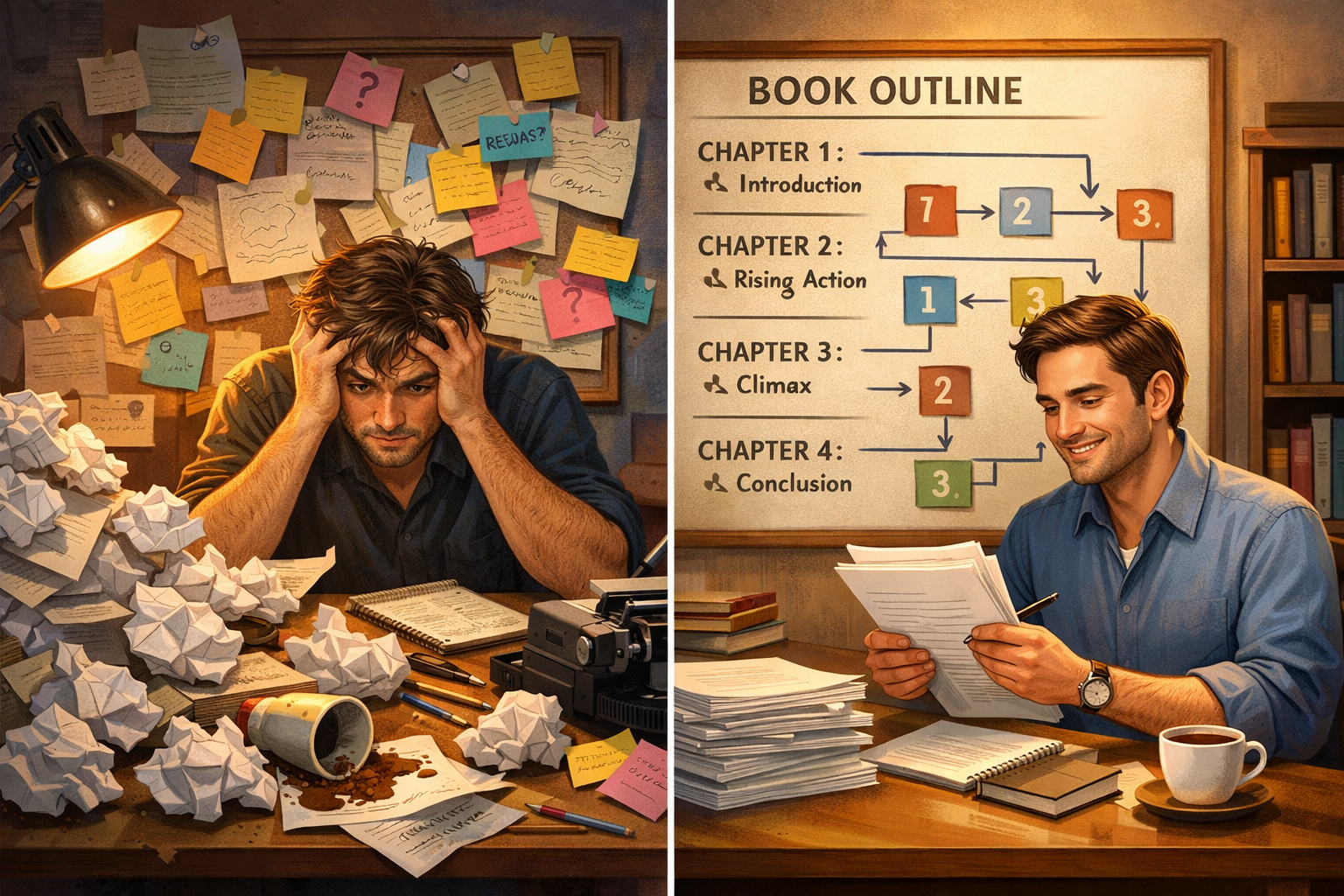
A book outline is essentially a structured blueprint that organizes your ideas, plot points, and key themes before you begin writing your manuscript. Think of it as the architectural plan for your literary creation—it shows you exactly where each element belongs and how all the pieces fit together to create a compelling whole.
Unlike a simple list of ideas, a proper book outline provides a clear roadmap that helps writers see their entire story from start to finish. This bird’s-eye view allows authors to spot potential plot holes, pacing issues, or character development problems before they become major obstacles during the writing process.
For fiction writers, an outline typically includes character arcs, major plot points, conflict escalation, and resolution strategies. It serves as your creative GPS, ensuring you never lose sight of where your story is heading, even when you’re deep in the weeds of writing individual scenes.
Why Writing a Book Outline Is Important
Prevents Writer’s Block 🚫
One of the biggest advantages of creating a detailed outline is how effectively it combats writer’s block. When you sit down to write and know exactly what happens next in your story, the blank page becomes far less intimidating. Your outline provides a constant source of direction and inspiration.
Maintains Story Consistency
Outlines help you track character development, plot threads, and thematic elements throughout your entire book. This consistency is crucial for creating a professional-quality manuscript that readers will find engaging and believable.
Accelerates the Writing Process
With a solid outline in place, your daily writing sessions become more productive. Instead of spending time figuring out what comes next, you can focus entirely on crafting compelling prose and bringing your characters to life.
Improves Story Structure
A well-planned outline ensures your book has proper pacing, logical progression, and satisfying character arcs. These structural elements are what separate published novels from abandoned first drafts.
The Basic Structure of a Book Outline
Beginning (Setup and Hook) 🎣
The opening section of your outline should establish your story’s foundation. This includes introducing your protagonist, setting up the world they inhabit, and presenting the central conflict that will drive your entire narrative forward.
Your beginning should also include a compelling hook—an intriguing situation, character, or mystery that immediately captures reader attention. Master the art of creating irresistible opening hooks to ensure your book grabs readers from page one.
Middle (Development and Escalation)
The middle section represents the bulk of your story and requires careful planning to maintain reader engagement. This is where you’ll develop your characters, escalate conflicts, introduce complications, and build toward your climax.
Many writers struggle with the middle section because it’s easy for pacing to lag or for the story to lose focus. A detailed outline helps you identify key turning points and ensures each chapter moves the story forward meaningfully.
Ending (Climax and Resolution)
Your outline’s conclusion should bring all story threads together in a satisfying resolution. This includes the climactic confrontation, character growth payoffs, and the new equilibrium your protagonist reaches after their journey.
Step-by-Step Guide to Writing a Book Outline
Step 1: Define Your Book’s Purpose 🎯
Before diving into plot details, clarify what your book aims to accomplish. Are you exploring themes of redemption, love, betrayal, or personal growth? Understanding your story’s deeper purpose helps ensure every scene serves the larger narrative.
Consider your target audience as well. Young adult readers have different expectations than literary fiction enthusiasts. Knowing your audience helps you make better decisions about tone, pacing, and content throughout your outline.
Step 2: Identify Your Core Premise
Distill your entire story into a single, compelling sentence. This premise should capture your protagonist, their goal, and the main obstacle preventing them from achieving it. For example: “A young wizard must defeat a dark lord to save his magical school and protect the people he loves.”
Step 3: Develop Your Main Characters
Create detailed profiles for your primary characters, including their backgrounds, motivations, flaws, and growth arcs. Understanding who your characters are and what they want makes it easier to plot their journey through your story.
Step 4: Map Out Major Plot Points
Identify the key events that must happen in your story. These typically include the inciting incident, major turning points, the climax, and resolution. Learn effective story plotting techniques to create compelling narrative structure.
Step 5: Break Your Story Into Chapters
Divide your major plot points into individual chapters, ensuring each one has a clear purpose and moves the story forward. Most novels contain 15-25 chapters, though this varies significantly by genre and story complexity.
Step 6: Add Scene Details
For each chapter, outline the specific scenes you’ll include. Note the setting, characters present, conflict or tension, and how the scene advances the overall plot or character development.
Different Types of Book Outlines
The Chapter-by-Chapter Outline 📝
This traditional approach involves creating a detailed summary for each chapter in your book. It’s particularly effective for writers who prefer structure and want to know exactly what happens in every section before they begin writing.
Example Chapter Outline:
- Chapter 1: Introduce protagonist at work, establish normal life, hint at coming conflict
- Chapter 2: Inciting incident occurs, protagonist’s world changes dramatically
- Chapter 3: Protagonist resists change, tries to maintain status quo
The Three-Act Structure
Based on classical dramatic theory, this approach divides your story into three major sections: setup, confrontation, and resolution. Each act serves a specific purpose in your narrative arc.
- Act 1 (25%): Character introduction, world-building, inciting incident
- Act 2 (50%): Rising action, complications, character development, midpoint twist
- Act 3 (25%): Climax, falling action, resolution
The Hero’s Journey Outline
Popularized by Joseph Campbell, this structure follows a protagonist through a transformative adventure. It’s particularly effective for fantasy, science fiction, and adventure stories.
The Snowflake Method
This approach starts with a simple one-sentence summary and gradually expands into a full outline through multiple iterations. Each “snowflake” level adds more detail and complexity to your story structure.
Tips for Creating a Strong Book Outline ⭐
Keep Chapters Focused
Each chapter should have one primary purpose—advancing the plot, developing character, or revealing crucial information. Avoid trying to accomplish too much in a single chapter, as this can confuse readers and muddy your narrative focus.
Maintain Logical Progression
Ensure your story events flow naturally from one to the next. Each scene should feel like a natural consequence of what came before, creating a chain of cause and effect that pulls readers through your narrative.
Stay Flexible During Writing
Remember that your outline is a guide, not a rigid contract. If you discover better plot developments or character moments while writing, don’t be afraid to deviate from your original plan. Develop a productive writing plan that balances structure with creative flexibility.
Consider Your Reader’s Experience
Think about pacing, tension, and emotional beats from your audience’s perspective. Vary the intensity of your scenes to create a satisfying rhythm that keeps readers engaged without overwhelming them.
Common Mistakes When Writing a Book Outline
Over-Outlining Your Story ⚠️
Some writers create outlines so detailed they remove all spontaneity from the writing process. If your outline reads like a complete summary rather than a roadmap, you may have gone too far. Leave room for discovery and creativity during the actual writing.
Skipping the Outline Entirely
While some successful authors write without outlines, most first-time novelists benefit significantly from having a structured plan. Understanding the steps to effective story writing can help you decide how much planning your writing style requires.
Perfectionism Paralysis
Don’t spend months perfecting your outline before writing a single page of your actual book. Your outline should be good enough to guide you, not perfect enough to publish. You’ll refine and improve your story during the writing and editing process.
Ignoring Character Development
Plot-focused outlines that neglect character growth often result in stories that feel mechanical or emotionally flat. Ensure your outline includes character arcs and emotional beats alongside plot events.
Neglecting the Middle
Many writers outline their beginning and ending clearly but leave the middle section vague. This approach often leads to sagging middles and pacing problems. Learn how to start plotting your novel with confidence to avoid these common structural issues.
Taking Your Outline to the Next Level
Test Your Premise
Before committing to a full manuscript, test your story concept with trusted readers or writing groups. Their feedback can help you identify potential problems while you’re still in the outline stage, saving significant time and effort later.
Research Your Genre
Study successful books in your genre to understand reader expectations and market trends. This knowledge helps you craft an outline that satisfies genre conventions while still offering something fresh and unique.
Plan Your Writing Schedule
Once your outline is complete, develop consistent writing habits to maintain momentum throughout your project. A good outline paired with regular writing sessions is the recipe for completing your first novel.
Consider Your Publishing Goals
Whether you plan to pursue traditional publishing or self-publish your work, understanding your end goal can influence certain outline decisions, particularly regarding length, genre conventions, and target audience.
Conclusion
Writing a Book Outline transforms the overwhelming task of creating a novel into a manageable, step-by-step process. By investing time in planning your story structure, character arcs, and key plot points before you begin writing, you’ll save countless hours of revision and dramatically increase your chances of completing your manuscript.
Remember that every successful author started exactly where you are now—with an idea and the determination to bring it to life. Your outline is the bridge between that initial spark of inspiration and the finished book sitting on a reader’s shelf.
Take action today: Start with your story’s core premise, identify your main characters, and begin mapping out the major events of your plot. Even a simple outline will provide the foundation you need to begin your writing journey with confidence. The book you’ve always dreamed of writing is waiting for you to create the roadmap that will bring it into existence.


