

Every bestselling author knows a secret that separates published writers from dreamers: structure is the invisible backbone that transforms scattered ideas into compelling narratives. Whether crafting a gripping thriller or an informative guide, mastering the art of writing a book structure determines whether readers eagerly turn pages or abandon the story halfway through.
Key Takeaways
• Strong book structure provides a roadmap that guides both writer and reader through the narrative journey
• Different genres require specific structural approaches – fiction relies on plot arcs while non-fiction uses logical frameworks
• The three-act structure serves as a universal foundation that can be adapted for various storytelling needs
• Chapter organization and pacing control reader engagement and determine overall reading experience
• Outlining before writing saves time and prevents major structural problems during the drafting process
Understanding the Foundation of Writing a Book Structure 📚
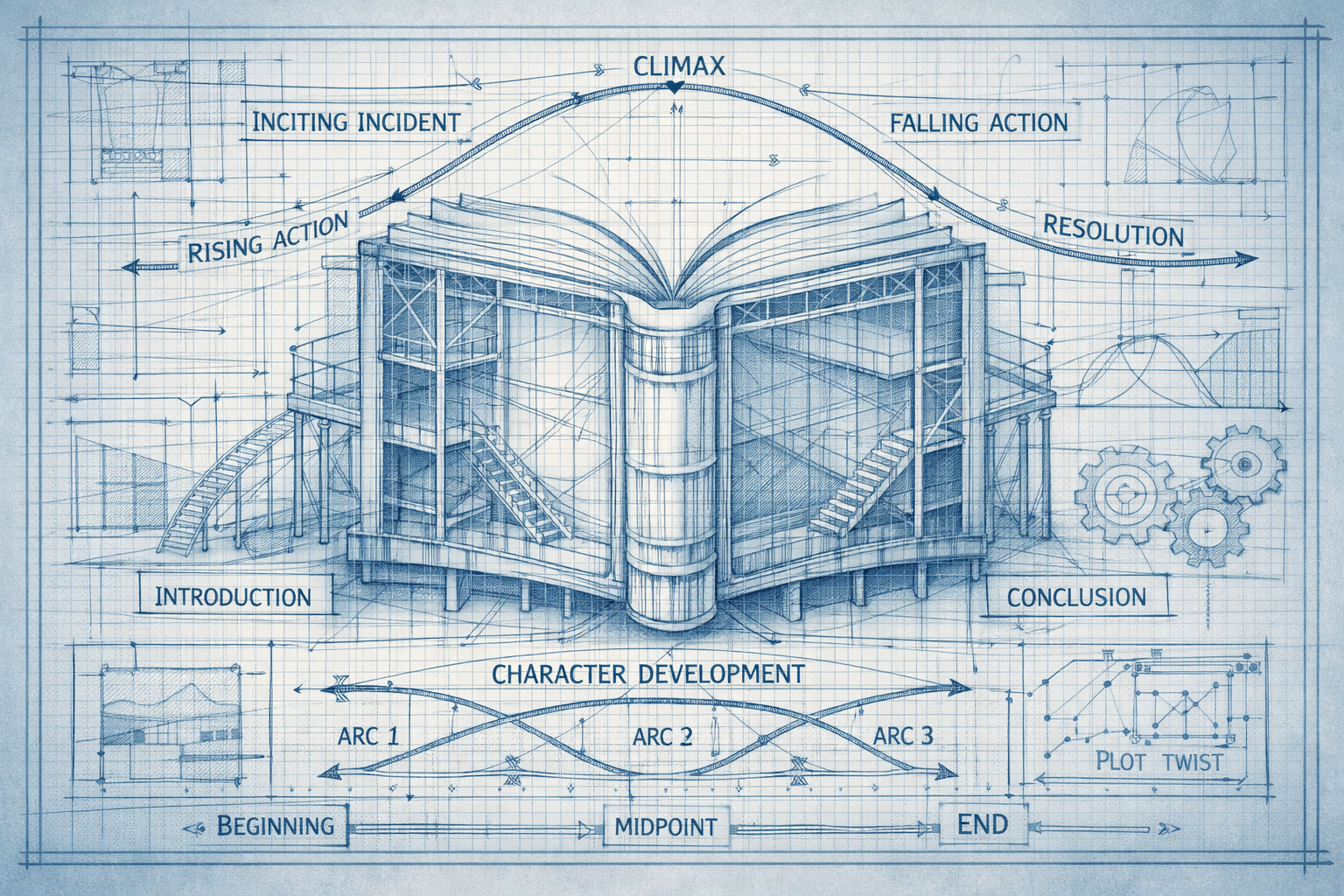
Book structure functions as the architectural blueprint for any written work. Just as builders follow blueprints to construct stable buildings, writers use structural frameworks to create coherent, engaging books that resonate with readers.
What Makes Structure Essential?
Structure provides several critical benefits:
- Reader navigation: Clear organization helps readers follow ideas and storylines
- Logical flow: Information or events unfold in meaningful sequences
- Emotional pacing: Strategic placement of tension, relief, and climax
- Writer guidance: A roadmap that prevents getting lost during the writing process
The foundation of effective book structure rests on understanding your target audience and genre expectations. Romance readers expect different structural elements than business book audiences. Understanding how to market your writing skills begins with knowing what readers in your genre value most.
Universal Structural Elements
Regardless of genre, successful books share common structural components:
| Element | Purpose | Example |
|---|---|---|
| Hook | Captures immediate attention | Intriguing opening scene |
| Setup | Establishes context and characters | Background information |
| Conflict | Creates tension and drives plot | Problems to solve |
| Resolution | Provides satisfying conclusion | Answers and closure |
Essential Elements of Fiction Book Structure
Fiction writing demands specific structural considerations that differ significantly from non-fiction approaches. How plot structure can enhance your storytelling reveals the intricate relationship between narrative elements and reader engagement.
The Three-Act Structure
The three-act structure forms the backbone of most successful fiction:
Act I: Setup (25%)
- Character introductions
- World-building
- Inciting incident
- Hook establishment
Act II: Confrontation (50%)
- Rising action
- Character development
- Obstacles and challenges
- Midpoint crisis
Act III: Resolution (25%)
- Climax
- Falling action
- Character transformation
- Satisfying conclusion
Advanced Fiction Structures
Beyond the basic three-act format, experienced writers employ sophisticated structural techniques:
The Hero’s Journey 🦸♂️
This mythological structure, popularized by Joseph Campbell, includes:
- Ordinary world
- Call to adventure
- Refusal of the call
- Meeting the mentor
- Crossing the threshold
- Tests and trials
- Death and rebirth
- Return transformed
Seven-Point Story Structure
- Hook
- Plot Turn 1
- Pinch Point 1
- Midpoint
- Pinch Point 2
- Plot Turn 2
- Resolution
Uncovering the power of conflict demonstrates how tension drives narrative momentum and keeps readers invested in character outcomes.
Character Arc Integration
Effective fiction structure weaves character development seamlessly into plot progression. Characters must evolve throughout the story, facing internal and external conflicts that force growth and change. Master the art of character creation to ensure your structural framework supports compelling character journeys.
Non-Fiction Book Structure Strategies
Non-fiction requires different structural approaches focused on information delivery and reader comprehension rather than emotional storytelling. The best methods for writing non-fiction emphasize clarity, logical organization, and practical value.
Problem-Solution Framework
This popular non-fiction structure follows a clear pattern:
- Problem identification: Define the reader’s challenge
- Context establishment: Explain why the problem matters
- Solution presentation: Offer actionable remedies
- Implementation guidance: Provide step-by-step instructions
- Results demonstration: Show expected outcomes
Chronological Structure
Perfect for:
- Biographies
- Historical accounts
- Process explanations
- Case studies
Events unfold in time order, creating natural narrative flow that readers easily follow.
Thematic Organization
Organizes content around central themes or concepts:
Benefits of Thematic Structure:
- Allows deep exploration of complex topics
- Enables flexible reading (readers can skip to relevant sections)
- Supports reference use
- Accommodates varying reader interests
8 tips for writing incredible non-fiction books provides additional strategies for creating compelling informational content that engages readers while delivering valuable insights.
Comparison and Contrast
Effective for books that:
- Evaluate options
- Analyze competing theories
- Present multiple perspectives
- Guide decision-making
This structure helps readers understand differences and make informed choices.
Chapter Organization and Pacing Techniques
Chapter structure significantly impacts reader experience and determines whether people finish your book. Well-organized chapters create momentum that pulls readers forward, while poorly structured chapters cause confusion and abandonment.
Optimal Chapter Length Guidelines
| Genre | Typical Length | Purpose |
|---|---|---|
| Thriller/Mystery | 1,500-3,000 words | Maintain tension |
| Literary Fiction | 2,000-4,000 words | Allow character development |
| Romance | 2,000-3,500 words | Balance emotion and plot |
| Non-fiction | 2,500-4,000 words | Complete concept coverage |
| Young Adult | 1,500-2,500 words | Match attention spans |
Chapter Opening Strategies
Strong chapter beginnings:
- Continue previous tension without resolution
- Introduce new complications or characters
- Shift perspective or timeline
- Pose intriguing questions that demand answers
Pacing Control Methods
Sentence Length Variation ✍️
- Short sentences create urgency
- Longer, complex sentences slow pace and allow reflection
- Mixing lengths maintains reader interest
Paragraph Structure
- Single-sentence paragraphs emphasize key points
- Longer paragraphs provide detailed explanation
- White space gives readers visual breathing room
Scene Transitions
Smooth transitions between scenes prevent reader confusion:
- Time markers (“Three hours later…”)
- Location changes (“Meanwhile, across town…”)
- Perspective shifts (“Sarah’s phone rang…”)
The clever use of subheadings reveals how strategic formatting enhances readability and guides reader attention through complex information.
Creating Effective Outlines for Writing a Book Structure
Outlining serves as the foundation for successful book structure, providing a roadmap that prevents structural problems and writer’s block. How to write a book outline effectively offers comprehensive guidance for creating detailed plans that support your writing process.
The Snowflake Method
This popular outlining technique builds complexity gradually:
Step 1: Write a one-sentence summary
Step 2: Expand to a paragraph
Step 3: Develop character summaries
Step 4: Expand each sentence to a paragraph
Step 5: Create character charts
Step 6: Expand to four pages
Step 7: Develop detailed character charts
Step 8: Create scene lists
Step 9: Write detailed scene descriptions
Step 10: Begin first draft
Mind Mapping for Structure
Visual learners benefit from mind mapping techniques:
- Central theme in the middle
- Major plot points as main branches
- Subplots and details as smaller branches
- Character arcs as connecting lines
- Themes and motifs as recurring elements
Chapter-by-Chapter Breakdown
Detailed outlines include:
Chapter Number and Title
Point of View Character
Setting and Time
Key Events
- What happens?
- Why does it matter?
- How does it advance the plot?
Character Development
- How do characters change?
- What do they learn?
- What conflicts arise?
Chapter Goals
- What must this chapter accomplish?
- How does it connect to overall structure?
- What questions does it raise or answer?
Outlining a novel makes writing easy demonstrates how thorough preparation streamlines the actual writing process and produces stronger final results.
Flexibility Within Structure
While outlines provide essential guidance, successful writers maintain flexibility:
“No plan survives contact with the enemy, and no outline survives contact with the creative process.”
Allow room for:
- Character surprises that feel authentic
- Plot discoveries that improve the story
- Structural adjustments that enhance pacing
- Theme development that emerges naturally
Common Structure Mistakes and How to Avoid Them
Understanding frequent structural pitfalls helps writers create stronger, more engaging books. These mistakes often derail promising manuscripts and frustrate readers.
Pacing Problems
Too Slow Start 🐌
- Problem: Excessive backstory or world-building before plot begins
- Solution: Start with action or conflict, weave background information gradually
- Example: Instead of three chapters of character history, begin with the inciting incident
Sagging Middle
- Problem: Loss of momentum in Act II
- Solution: Introduce new complications, raise stakes, add subplot tension
- Technique: The midpoint should fundamentally change the protagonist’s approach
Rushed Ending
- Problem: Insufficient time for resolution
- Solution: Allow adequate space for emotional payoff and loose end tying
Character Arc Disconnection
Weak Integration
Characters must grow and change in response to plot events. When character development feels separate from the main story, readers lose emotional investment.
Solution Strategies:
- Link character flaws to central conflict
- Force characters to confront their weaknesses
- Show growth through actions, not just dialogue
- Ensure character change drives plot resolution
Information Dumping
The Problem
Overwhelming readers with too much information at once, especially common in:
- Fantasy world-building
- Science fiction technical details
- Non-fiction concept explanations
- Historical background
Prevention Techniques:
- Drip-feed information as needed
- Use dialogue to convey background naturally
- Show through action rather than explain
- Trust reader intelligence to infer details
Structural Inconsistency
Genre Mixing Issues
Combining elements from different genres without understanding their structural requirements often creates confused narratives.
Point of View Problems
- Inconsistent perspective shifts
- Head-hopping within scenes
- Unclear narrative voice
- Mixed tenses without purpose
Book structure examples that enhance your writing provides concrete illustrations of effective structural choices across different genres and formats.
Conclusion
Mastering the art of writing a book structure transforms scattered ideas into compelling narratives that captivate readers from beginning to end. Whether crafting fiction or non-fiction, understanding structural principles provides the foundation for successful writing.
Key structural elements – clear organization, logical pacing, character development, and genre-appropriate frameworks – work together to create books that readers eagerly consume and remember. The three-act structure serves as a universal starting point, while specialized approaches like the Hero’s Journey or problem-solution frameworks address specific genre needs.
Effective outlining prevents common structural mistakes and provides the roadmap necessary for completing book projects. From chapter organization to pacing techniques, every structural decision impacts reader experience and engagement.
Take action today by choosing an outlining method that matches your learning style. Whether using the Snowflake Method, mind mapping, or chapter-by-chapter breakdowns, begin with a clear structural plan. Remember that flexibility within structure allows for creative discoveries while maintaining the framework readers need to follow your narrative journey.
Your book’s success depends not just on brilliant ideas or beautiful prose, but on the invisible architecture that supports and showcases your content. Master the fundamentals of book structure, and watch your writing transform from good to unforgettable.


