

Every great book starts with a single idea, but without the right structure, even the most brilliant concept can become a scattered mess of thoughts and half-finished chapters. Whether you’re dreaming of penning the next bestselling novel or sharing your expertise through non-fiction, a well-designed writing a book template serves as your roadmap from blank page to published work. This comprehensive guide will equip you with the essential frameworks, tools, and strategies needed to organize your thoughts, maintain momentum, and complete your manuscript with confidence.
Key Takeaways
• A structured template eliminates writer’s block by providing clear direction for each writing session
• Different book types require specific template approaches – fiction needs character arcs and plot points, while non-fiction focuses on logical information flow
• Pre-planning with templates saves months of revision time by establishing clear goals and organization from the start
• Successful templates include both creative elements and practical milestones to keep writers motivated and on track
• Digital and physical template options offer flexibility for different writing styles and preferences
Understanding the Foundation of a Writing a Book Template
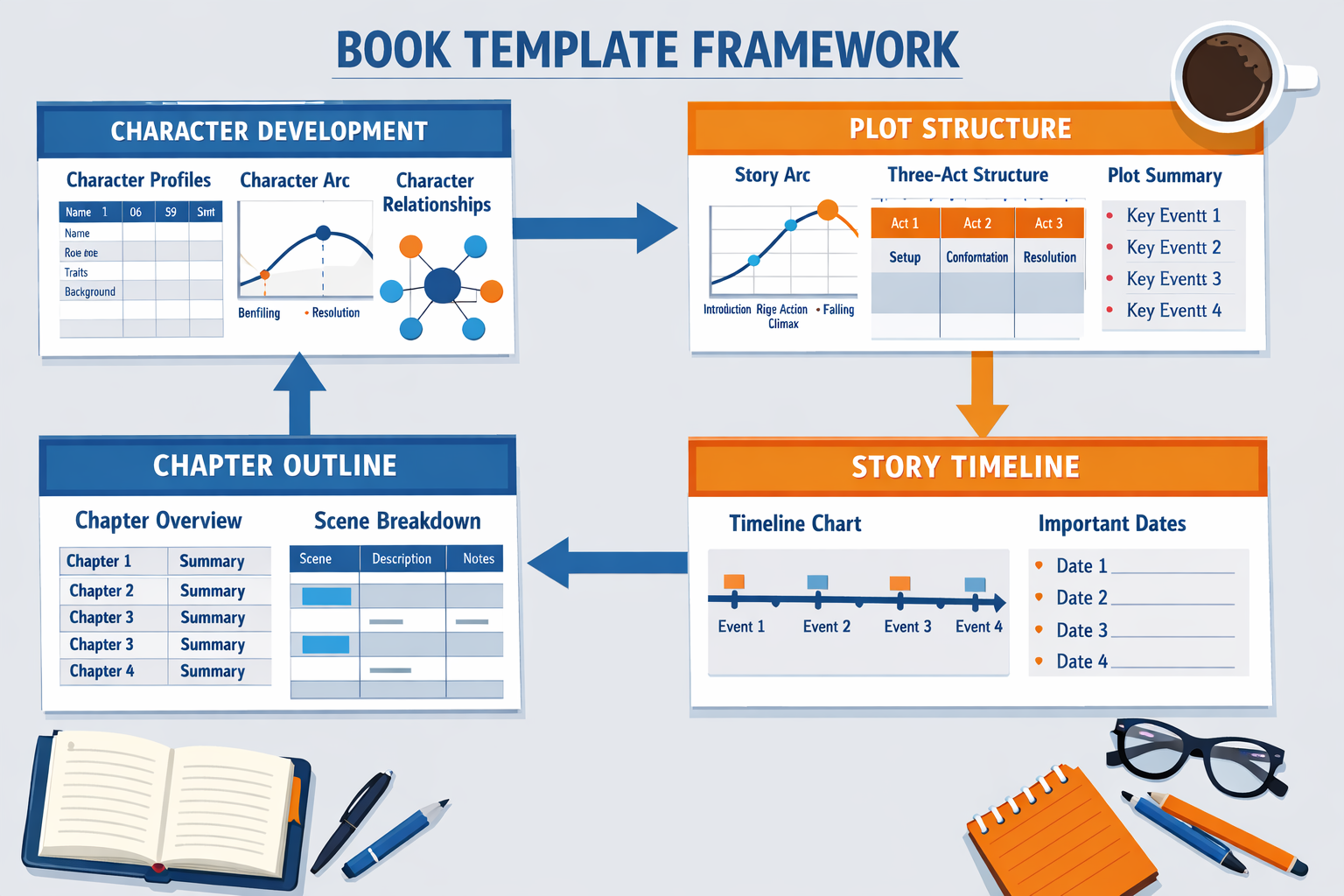
A writing a book template functions as the architectural blueprint for your literary project. Just as builders wouldn’t construct a house without detailed plans, authors shouldn’t attempt to write a book without a solid structural foundation. These templates provide organization, maintain consistency, and help writers navigate the complex journey from initial concept to final draft.
The most effective templates address three critical areas: content organization, writing workflow, and progress tracking. Content organization ensures your ideas flow logically and engage readers throughout their journey. Writing workflow establishes consistent habits and productive writing sessions. Progress tracking maintains motivation by celebrating milestones and identifying areas needing attention.
Essential Components Every Template Should Include
Story or Content Outline: This forms the backbone of your template, whether you’re crafting fiction or non-fiction. For novels, this includes major plot points, character development arcs, and scene breakdowns. Non-fiction works require chapter summaries, key concepts, and supporting evidence or examples.
Character Profiles (for fiction) or Reader Personas (for non-fiction): Understanding your characters or target audience deeply influences every writing decision. Templates should include dedicated spaces for developing these crucial elements.
Research and Reference Sections: Every book benefits from thorough research. Your template should accommodate source materials, fact-checking notes, and reference lists that support your narrative or arguments.
Writing Schedule and Milestones: Successful authors treat writing like a professional commitment. Templates must include realistic timelines, daily or weekly word count goals, and celebration points for maintaining motivation.
For those interested in developing their foundational writing abilities, exploring comprehensive writing skill development strategies can significantly enhance template effectiveness.
Choosing the Right Writing a Book Template for Your Genre
Different literary genres require distinct structural approaches, making template selection crucial for project success. Fiction templates emphasize character development, plot progression, and emotional arcs that keep readers engaged from beginning to end. Non-fiction templates prioritize logical information presentation, credible research integration, and practical value delivery.
Fiction Template Essentials
Fiction writers benefit from templates that accommodate the three-act structure or alternative narrative frameworks. The setup phase introduces characters, establishes setting, and presents the central conflict. The confrontation phase develops tension through obstacles and character growth. The resolution phase provides satisfying conclusions and character transformations.
Character development sections within fiction templates should track:
- Physical descriptions and personality traits
- Background history and motivations
- Character arcs and growth throughout the story
- Relationships with other characters
- Dialogue patterns and unique voice characteristics
Plot tracking elements help maintain narrative momentum:
- Scene-by-scene breakdowns with specific purposes
- Subplot integration and resolution points
- Pacing notes for tension and relief moments
- Foreshadowing and payoff tracking
- Conflict escalation patterns
Non-Fiction Template Structure
Non-fiction templates prioritize logical information flow and reader value delivery. These templates typically follow problem-identification, solution-presentation, and implementation-guidance patterns that serve reader needs effectively.
Essential non-fiction template components include:
Chapter-by-Chapter Outlines: Each chapter should serve a specific purpose in advancing your overall argument or teaching objective. Templates should clearly define chapter goals, key points, supporting evidence, and transitions to subsequent sections.
Research Organization Systems: Non-fiction credibility depends on solid research foundation. Templates must accommodate source tracking, quote management, and fact-verification processes that support your expertise claims.
Reader Engagement Elements: Modern non-fiction requires interactive components like exercises, case studies, and practical applications. Templates should designate spaces for these engagement tools throughout your manuscript.
Writers focusing on non-fiction can benefit from exploring proven non-fiction writing methodologies that complement template structures.
Creating Your Personalized Writing a Book Template System
The most effective writing a book template reflects your unique writing style, project requirements, and personal preferences. Rather than adopting generic templates wholesale, successful authors customize frameworks that align with their creative processes and practical constraints.
Digital vs. Physical Template Options
Digital templates offer flexibility, easy editing, and integration with writing software. Popular options include:
- Scrivener: Comprehensive writing software with built-in template features
- Google Docs or Microsoft Word: Accessible platforms with customizable outline structures
- Notion or Airtable: Database-driven approaches for complex project management
- Specialized writing apps: Tools like Plottr for fiction or MindMeister for concept mapping
Physical templates appeal to writers who prefer tactile planning experiences:
- Bullet journals: Customizable systems for tracking progress and organizing thoughts
- Wall charts: Visual displays for plot timelines or chapter structures
- Index card systems: Flexible arrangements for scene or concept organization
- Printed worksheets: Structured forms for character development or research tracking
Template Customization Strategies
Start with basic structure and expand based on your project’s specific needs. Begin with fundamental elements like chapter outlines and character profiles, then add specialized sections as your understanding of the project develops.
Incorporate your writing habits into template design. If you write best in the morning, include daily goal-setting sections. If you prefer weekend writing marathons, design weekly milestone tracking systems.
Build in flexibility for creative discoveries that emerge during the writing process. Templates should guide without constraining the natural evolution of ideas and characters that occurs during manuscript development.
Include motivation and accountability elements that maintain momentum during challenging periods. This might include progress visualization charts, reward systems for milestone completion, or reflection sections for processing writing challenges.
For writers seeking to establish consistent writing practices, exploring daily writing habit development techniques can enhance template effectiveness significantly.
Implementing Your Template for Maximum Writing Success
Having a well-designed writing a book template means nothing without consistent implementation and strategic usage. The most beautifully crafted template becomes worthless if it sits unused or gets abandoned after the initial enthusiasm wanes.
Establishing Template-Based Writing Routines
Daily template engagement transforms abstract planning into concrete progress. Begin each writing session by reviewing your template’s current status, identifying the day’s specific objectives, and updating progress markers. This practice maintains connection between your overall vision and immediate writing tasks.
Weekly template reviews provide opportunities for course correction and motivation renewal. Assess completed sections, adjust timelines based on actual progress, and celebrate achievements that move you closer to manuscript completion.
Monthly template evolution allows for strategic adjustments based on project development and changing circumstances. Templates should grow and adapt as your understanding of the project deepens and your writing skills improve.
Overcoming Common Template Implementation Challenges
Template abandonment often occurs when writers feel constrained by rigid structures. Combat this by building flexibility into your system and treating templates as guides rather than absolute rules. Allow room for creative discoveries that enhance your original vision.
Perfectionism paralysis can prevent writers from starting because their template doesn’t feel complete or sophisticated enough. Remember that templates improve through use, not endless planning. Start with basic structures and refine based on actual writing experience.
Progress tracking difficulties discourage writers when reality doesn’t match optimistic initial timelines. Build buffer time into your schedules and focus on consistent effort rather than perfect adherence to arbitrary deadlines.
Writers experiencing creative blocks can benefit from exploring effective writer’s block solutions that work alongside template systems.
Measuring Template Effectiveness
Word count tracking provides quantitative measures of template success. Monitor daily, weekly, and monthly output to identify patterns and optimize your approach for maximum productivity.
Quality assessment ensures that increased productivity doesn’t compromise writing standards. Regular review of completed sections helps maintain narrative consistency and identifies areas needing revision attention.
Motivation levels indicate whether your template supports long-term project completion. If enthusiasm wanes despite progress, consider adjusting template elements to better align with your creative preferences and working style.
Timeline accuracy reveals how well your template reflects realistic writing capabilities. Use actual completion times to improve future project planning and set achievable goals that maintain momentum without creating unnecessary pressure.
Advanced Template Strategies for Professional Results
Experienced writers often develop sophisticated writing a book template systems that integrate multiple projects, incorporate market research, and streamline the path from manuscript to publication. These advanced strategies can significantly accelerate writing careers and improve project outcomes.
Multi-Project Template Management
Series planning templates help fiction writers maintain consistency across multiple books while developing overarching storylines and character evolution. These systems track character details, world-building elements, and plot threads that span multiple volumes.
Non-fiction expertise mapping allows authors to identify multiple book opportunities within their knowledge areas. Templates can organize expertise into distinct book concepts, preventing overlap while maximizing content value across different projects.
Cross-project resource sharing enables efficient use of research, character development work, and world-building efforts across related writing projects. Smart template design facilitates this sharing without compromising individual project integrity.
Market-Informed Template Development
Reader research integration ensures your template addresses genuine audience needs rather than author assumptions. Include sections for target reader analysis, competitive book evaluation, and market trend consideration that inform content decisions.
Publishing pathway planning helps writers align their templates with specific publication goals. Self-publishing requires different preparation than traditional publishing, and templates should reflect these pathway-specific requirements.
Marketing preparation elements can be built into writing templates, ensuring that promotional materials and audience engagement strategies develop alongside manuscript creation rather than as afterthoughts.
Authors planning to self-publish their completed manuscripts can benefit from templates that integrate marketing preparation with writing development.
Professional Template Features
Collaboration tools become essential when working with editors, beta readers, or co-authors. Templates should accommodate feedback integration, revision tracking, and communication management that supports professional publishing workflows.
Rights and legal tracking sections help authors manage intellectual property considerations, especially when incorporating research, quotes, or collaborative elements that require permission or attribution.
Financial planning integration allows authors to track project costs, potential revenue streams, and business aspects of writing careers alongside creative development. This holistic approach supports sustainable writing careers.
Quality control checklists ensure that completed manuscripts meet professional standards before submission or publication. Templates should include editing phases, proofreading requirements, and formatting specifications that support successful book launches.
Writers interested in comprehensive book launch preparation can explore detailed launch planning strategies that complement advanced template systems.
Conclusion
A well-designed writing a book template transforms the overwhelming task of writing a book into a manageable series of achievable steps. By providing structure, maintaining focus, and tracking progress, these templates eliminate many common obstacles that prevent aspiring authors from completing their manuscripts. Whether you choose digital tools or physical planning systems, the key lies in consistent implementation and gradual refinement based on your unique writing style and project requirements.
The journey from blank page to finished book becomes significantly more achievable when supported by thoughtful planning and organized execution. Your template serves as both roadmap and companion throughout this creative adventure, providing guidance during uncertain moments and celebrating progress toward your publishing goals.
Take action today by selecting a basic template structure that matches your genre and writing preferences. Start with essential elements like chapter outlines and progress tracking, then expand your system as you gain experience and confidence. Remember that the perfect template is the one you actually use consistently, not the most sophisticated system you never implement.
Your book is waiting to be written, and with the right template foundation, you’re equipped to transform your ideas into a completed manuscript that shares your unique voice with the world. The writing journey begins with a single word, guided by a solid plan that turns dreams into published reality.


