

Picture this: a reader sits at their computer, completely absorbed in a story where their choices determine whether the hero saves the kingdom or watches it fall. They’re not just reading—they’re actively shaping the narrative with every decision. This is the magic of writing a story game, where traditional storytelling meets interactive entertainment to create experiences that captivate players for hours. 📖✨
In 2026, story-driven games have exploded in popularity, from indie visual novels to massive role-playing adventures. The secret behind their success? Compelling narratives that make players feel like co-authors of their own adventure. Whether you’re an aspiring author looking to explore new storytelling mediums or a creative writer wanting to expand your skills, learning to craft interactive stories opens up exciting possibilities.
This comprehensive guide will walk you through every step of creating your first story game, from developing core ideas to choosing the right tools for bringing your vision to life.
Key Takeaways
• Story games blend traditional narrative techniques with player choice, creating personalized experiences that adapt based on decisions
• Strong character development and world-building form the foundation of memorable interactive stories
• Meaningful choices with clear consequences keep players engaged and encourage multiple playthroughs
• Simple tools and platforms make it possible for beginners to create professional-quality story games without programming knowledge
• Testing and iteration are essential for identifying plot holes and improving player engagement
What Is a Story Game?
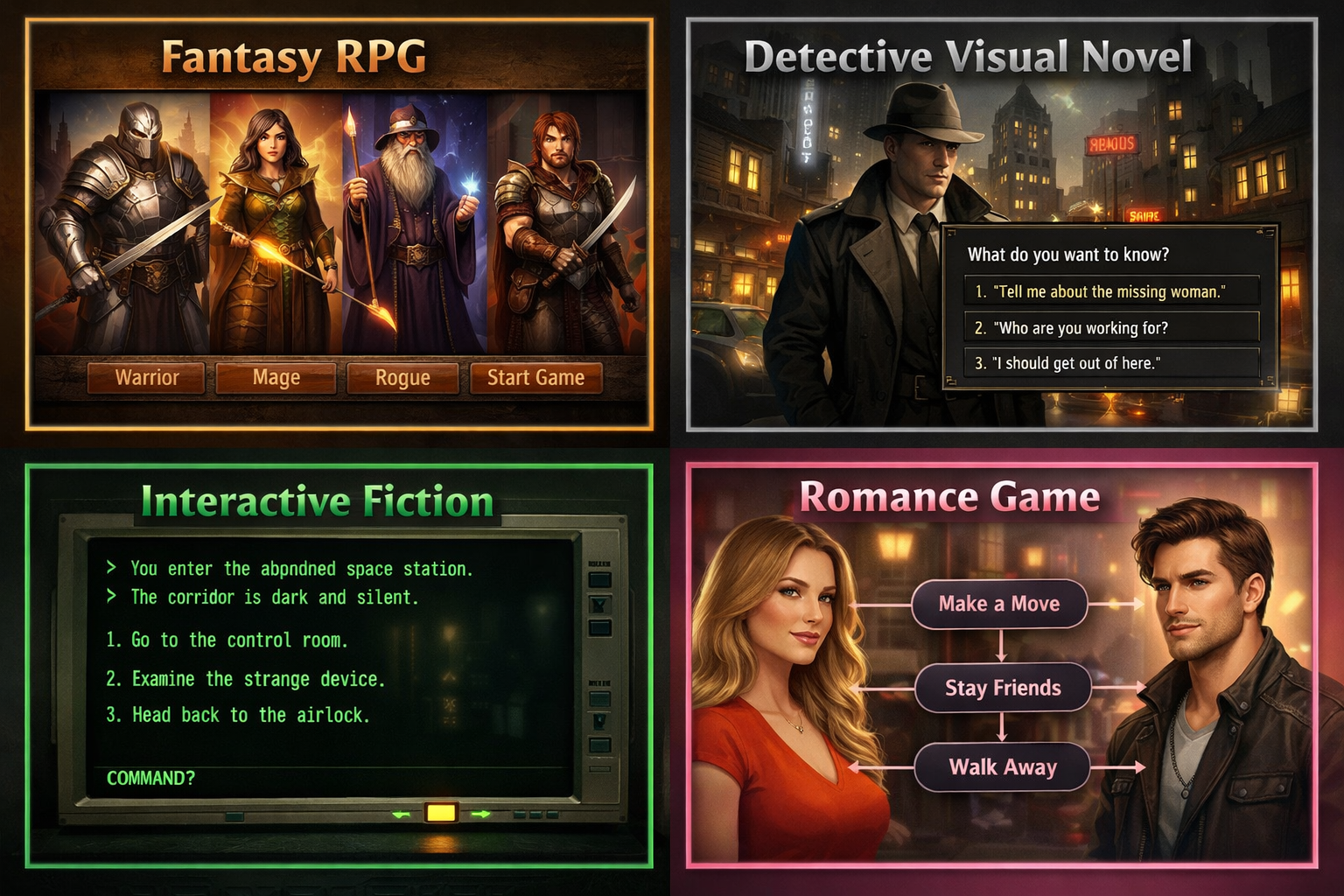
A story game is an interactive narrative experience where players influence the plot through their choices and actions. Unlike traditional books where readers follow a predetermined path, story games offer multiple routes through the narrative, creating a personalized storytelling experience.
Story-driven games differ significantly from gameplay-focused titles. While action games prioritize mechanics like shooting or jumping, narrative games center on character development, plot progression, and emotional engagement. The “gameplay” consists of making meaningful decisions that shape the story’s direction.
Popular Story Game Genres
Interactive Fiction represents the purest form of story games, using primarily text to create immersive worlds. Players read descriptions and make choices through simple commands or menu selections.
Visual Novels combine storytelling with artwork, featuring character illustrations, backgrounds, and sometimes voice acting. Popular in Japan, this format has gained worldwide recognition for its emotional depth.
Choice-Based Games present players with branching dialogue trees and decision points that significantly impact the story’s outcome. These games often feature multiple endings based on accumulated choices.
Role-Playing Games (RPGs) integrate story elements with character progression systems, allowing players to develop their protagonist’s abilities while experiencing an epic narrative.
Why Story Matters in Games
Stories create emotional engagement that transforms simple interactions into memorable experiences. When players care about characters and their struggles, every choice carries weight and meaning.
Narrative gives purpose to player actions. Instead of randomly clicking buttons, players make deliberate decisions because they understand the stakes and consequences. This connection between choice and meaning keeps players invested throughout the experience.
Strong storytelling encourages replayability by offering different paths and outcomes. Players return to explore alternative choices, discover hidden storylines, and experience new character interactions. This replay value extends the life of your story game far beyond a single playthrough.
Step 1: Develop the Core Story Idea
Every great story game begins with a compelling central concept. Start by choosing a genre that excites you—fantasy quests, mystery investigations, science fiction adventures, or contemporary drama. Your passion for the setting will shine through in your writing and engage players more effectively.
Create a main conflict or central question that drives the entire narrative. This might be “Can the protagonist prevent an ancient evil from awakening?” or “Will the detective solve the case before another victim falls?” The central conflict provides focus and helps players understand what’s at stake.
Establish the world where your story takes place. This doesn’t require extensive world-building initially, but players need enough context to make informed decisions. Consider the time period, location, social structures, and any special rules that govern your story’s universe.
When developing your storytelling skills, remember that interactive narratives require extra consideration for how player choices will affect the world you’ve created.
Step 2: Create Interesting Characters
Character development forms the heart of any successful story game. Your protagonist should be relatable yet interesting enough to sustain player attention throughout the entire experience. Give them clear goals, flaws, and room for growth based on player choices.
Supporting characters and antagonists need distinct personalities and motivations. Each character should serve a specific purpose in the narrative while feeling like a real person with their own agenda. Avoid creating characters who exist solely to deliver information or advance the plot.
Backstories and motivations provide depth that players can discover through dialogue and interaction. Consider how each character’s history influences their current behavior and how players might uncover these details through their choices.
For comprehensive guidance on character development, explore our detailed guide on creating relatable characters that players will remember long after finishing your game.
Step 3: Build the Story Structure
Traditional story structure still applies to interactive narratives, but with added complexity. Your story needs a clear beginning that establishes the world and characters, a middle section that develops conflict and tension, and satisfying endings that resolve the central questions.
Story arcs and pacing require careful consideration in interactive formats. Players need time to absorb information and make thoughtful decisions, but too much exposition can slow momentum. Balance action sequences with character development and world-building.
Meaningful choices should appear at crucial story moments where different decisions lead to genuinely different outcomes. Avoid false choices where all options lead to the same result, as players quickly recognize and resent this illusion of agency.
Understanding proper plot structure becomes even more important when writing story games, as you need to maintain narrative coherence across multiple possible paths.
Step 4: Design Player Choices
Branching story paths create the interactive element that distinguishes story games from traditional narratives. Map out major decision points and how different choices lead to alternative scenes or dialogue options. Start simple with two or three branches before attempting complex multi-path narratives.
Consequences for decisions should feel logical and meaningful. If a player chooses to trust a suspicious character, that decision should have clear ramifications later in the story. These consequences don’t always need to be immediate—delayed results can create powerful dramatic moments.
Multiple endings based on accumulated choices provide strong motivation for replay. Consider creating 3-5 different endings that reflect the player’s major decisions throughout the game. Each ending should feel earned and satisfying based on the choices that led to it.
Step 5: Write Interactive Dialogue
Natural conversations between characters require special attention in interactive formats. Dialogue must sound realistic while providing clear choices for player responses. Avoid overly formal or exposition-heavy conversations that break immersion.
Player influence on conversations creates engagement and agency. Allow players to choose their character’s personality through dialogue options—aggressive, diplomatic, humorous, or mysterious responses that shape how other characters perceive and interact with them.
Dialogue as revelation serves multiple purposes in story games. Conversations should advance the plot, develop character relationships, and provide opportunities for players to learn more about the world and its inhabitants.
Step 6: Choose the Right Tools to Create Your Story Game
Interactive storytelling tools have made writing a story game accessible to beginners without programming knowledge. Platforms like Twine, Ink, and ChatMapper provide user-friendly interfaces for creating branching narratives with minimal technical barriers.
Game engines and platforms offer more advanced features for ambitious projects. Unity, Ren’Py, and GameMaker Studio support visual novels and choice-based games with professional-quality graphics and sound integration.
Beginner-friendly tools focus on storytelling over technical complexity. Twine uses simple markup language that writers can learn quickly, while Ink integrates with popular game engines for more advanced projects. Choose tools that match your technical comfort level and project scope.
Step 7: Test and Improve Your Story Game
Playtesting with others reveals problems that authors often miss. Fresh eyes catch confusing choices, plot inconsistencies, and pacing issues that become invisible after extensive revision. Recruit friends, family, or online communities to test your game and provide feedback.
Identifying problems requires systematic observation of player behavior. Watch where testers hesitate, become confused, or lose interest. Note which choices feel meaningful and which seem arbitrary or unclear.
Improving engagement based on feedback might involve rewriting unclear passages, adding missing context, or restructuring choice sequences. Don’t be afraid to make significant changes if testing reveals fundamental issues with your story structure.
When developing strong writing habits, include regular testing and revision cycles to continuously improve your interactive storytelling skills.
Tips for Writing Better Story Games
Keep player agency central to every design decision. Players should feel that their choices matter and that they’re actively shaping the story rather than just selecting different ways to experience a predetermined narrative.
Avoid overly complicated branching that creates confusion or requires extensive tracking of variables. Complex systems can overwhelm both players and authors, leading to plot inconsistencies and technical difficulties.
Focus on emotional engagement and character development over elaborate mechanics or extensive world-building. Players connect with compelling characters and meaningful relationships more than complex systems or detailed lore dumps.
Remember that great writers develop their careers by consistently producing quality work, and story games offer an excellent opportunity to practice and showcase your storytelling abilities.
Conclusion
Writing a story game combines the best elements of creative writing with interactive design, creating experiences that engage players as active participants rather than passive observers. Through careful character development, meaningful choices, and compelling narratives, anyone can create interactive stories that captivate and entertain audiences.
The key to success lies in strong storytelling fundamentals—interesting characters, clear conflicts, and emotional engagement—enhanced by thoughtful integration of player choice and agency. Modern tools have eliminated technical barriers, making it possible for writers to focus on what matters most: crafting memorable stories that players will want to experience multiple times.
Ready to start your story game journey? Begin by developing a simple concept with clear characters and conflicts. Choose beginner-friendly tools like Twine or Ink to bring your vision to life. Most importantly, start writing and testing your ideas with real players—their feedback will guide you toward creating the interactive stories that players truly love.
Your first story game doesn’t need to be perfect, but it should be finished. Complete projects teach valuable lessons about pacing, choice design, and player engagement that no amount of planning can replace. Take the first step today, and discover the exciting world of interactive storytelling that awaits your creativity.


